Showing posts with label EnterpriseAI. Show all posts

Tuesday, September 08, 2026

Beyond the Algorithm: Why Leadership Will Define the Real Impact of AI

 Artificial intelligence is rapidly moving from experimentation to mainstream adoption. Across sectors, organisations are deploying AI to automate processes, analyse complex datasets, improve customer experiences, accelerate decisions and create entirely new business models. Yet, as access to sophisticated technology becomes increasingly democratised, the real competitive advantage will not come from possessing AI alone. It will come from the ability to convert its potential into responsible, scalable and measurable outcomes.

This is fundamentally a leadership and execution challenge.

Many organisations begin their AI journey by identifying tools or launching isolated pilots. While such experimentation is valuable, it does not automatically translate into enterprise-wide impact. A successful AI initiative must address a genuine business problem, align with organisational priorities, integrate with existing processes and earn the confidence of the people expected to use it. Without these foundations, even the most advanced solution can remain an impressive demonstration rather than a meaningful transformation.

This is where project leadership becomes indispensable. AI initiatives involve far more than technology implementation. They require coordination across business functions, technology teams, data owners, customers, partners and governance bodies. Leaders must define clear outcomes, establish accountability, manage uncertainty and create mechanisms through which learning from early deployments can inform subsequent decisions.

Traditional project disciplines remain highly relevant, but they must evolve for an environment in which models, data and regulatory expectations can change rapidly. Instead of treating an AI deployment as a one-time technology project, organisations must manage it as a continuing capability—one that requires monitoring, refinement and responsible oversight throughout its lifecycle.

Human judgement will therefore become more important, not less.

AI can process information at extraordinary speed, uncover patterns and recommend actions. However, it cannot independently determine which organisational values should guide a decision, what level of risk is acceptable or how an outcome may affect different stakeholders. These remain leadership responsibilities. The strongest leaders will know when to rely on technology, when to question its recommendations and when human experience, empathy and contextual understanding must prevail.

Responsible AI must also move beyond policy statements. Principles such as fairness, transparency, privacy and accountability must be embedded within project governance, solution design and operational reviews. Every material AI initiative should have a clearly identified business owner, measurable success criteria, defined escalation mechanisms and ongoing evaluation of intended and unintended consequences.

India has a remarkable opportunity to shape this next phase of transformation. Our scale, technological talent and diverse economic landscape provide a powerful environment for developing AI solutions with global relevance. Realising that opportunity will require sustained collaboration among industry, government, academia, professional communities, startups and civil society.

I look forward to contributing to this wider conversation at Bharat AI Innovation 2026 in Mumbai (https://www.linkedin.com/posts/bharat-ai-innovation_bharataiinnovation-rinoorajesh-pmipune-activity-7495359748377243648-oP0E ), where leaders and innovators will explore how AI can help create more adaptive and future-ready organisations.

The future will not belong simply to organisations that adopt AI first. It will belong to those that deploy it with clarity, discipline and purpose—using technology to strengthen human capability rather than diminish it. AI may expand what is possible, but leadership will determine what is valuable, responsible and enduring.

Sunday, April 26, 2026

DPDP, Trust, and the New Rulebook for AI in Indian Customer Experience

DPDP, Trust, and the New Rulebook for AI in Indian Customer Experience | Rinoo Rajesh
Blog • DPDP • AI Governance • CX Strategy

DPDP, Trust, and the New Rulebook for AI in Indian Customer Experience

Author: Rinoo Rajesh Published: 19 Apr 2026 Reading time: ~5 mins

Let’s be honest. Most CX leaders do not wake up feeling excited about regulation.

Words like consent architecture, breach reporting, and governance frameworks rarely make it into keynote highlights. But in 2026, if you are leading customer experience in India, regulation is no longer a side note. It is becoming a design principle.

And that changes everything.

Why DPDP Matters Beyond Compliance

India’s Digital Personal Data Protection framework is often discussed through the lens of risk, fines, and legal obligations. That is understandable. But I think that reading is too narrow.

At its core, DPDP is not just about data control. It is about trust. Consent must be informed. Withdrawal must be easy. Data processing must be responsible. Breaches must be addressed. Strip away the legal phrasing and what remains is something every strong CX leader already understands: respect, clarity, accountability, and reversibility.

That is why I believe the smartest enterprises will not treat DPDP as a burden. They will use it as a forcing function to build better customer experience.

Where AI Raises the Stakes

As AI becomes more deeply embedded into customer-facing workflows, the stakes naturally rise. AI is no longer just drafting responses or summarizing interactions. It is increasingly guiding service decisions, influencing escalations, identifying anomalies, and supporting operational enforcement.

That means the intersection between AI and data protection is no longer theoretical. It is operational. Every AI-enabled workflow now raises practical questions. What data is being used? Was consent obtained meaningfully? Can the customer understand what is happening? Is there a path to human review? Is the data architecture sound enough to support trustworthy automation?

Good AI needs good governance. And good governance, in turn, creates better customer confidence.

The Trust Gap Most Firms Ignore

Many enterprises still assume that if the AI works technically, the customer problem is solved. That is not how trust works. Customers do not judge an interaction only by speed. They judge it by fairness, clarity, and whether they feel trapped or respected.

That is why the future winners in Indian CX will not just be the firms with the most AI tools. They will be the firms that make AI understandable, governable, and accountable.

To do that, four disciplines matter.

1. Map the Data Moments

Every AI-enabled customer journey has points where personal data is collected, interpreted, processed, or acted upon. These are what I call data moments. If your teams cannot clearly identify them, your compliance posture is weak and your journey design is incomplete.

And no, this is not just legal housekeeping. It directly affects how safe, predictable, and explainable your customer experience feels.

2. Explain the Role of AI Clearly

Customers do not necessarily reject AI. More often, they reject confusion. If AI is involved, say so. Explain what it can help with. Explain where human intervention is available. Transparency is not just a governance feature. It is a trust feature.

3. Fix the Data Layer Before Over-Scaling the AI Layer

This part sounds boring, which is probably why many firms postpone it. But broken data creates fast, scalable wrongness. If your CRM, service history, QA systems, and consent records are fragmented, your AI will inherit those weaknesses and amplify them.

That is not an AI problem. It is an operating model problem.

4. Design Human Escalation as a Safety Net

Human fallback should not feel like a hidden escape hatch. It should feel intentional. Customers want efficiency, yes, but they also want reassurance. In many journeys, a clearly designed human path is what makes them willing to trust automation in the first place.

India Has a Strategic Window

One of the underappreciated advantages India has right now is regulatory direction. The environment is becoming clearer, and that clarity gives enterprises a chance to act thoughtfully rather than react defensively. That matters, especially in AI-enabled CX, where poor design can quickly become a trust and compliance issue.

So if you lead CX, operations, digital transformation, or AI in India, this is not the year to ask whether regulation will affect your roadmap. It already does. The better question is whether you can turn governance into differentiation.

The Real Strategic Opportunity

The firms that get this right will do more than stay compliant. They will become easier to trust. Easier to scale. Easier to recommend. And in customer experience, that is a serious strategic advantage.

Trust has always mattered in CX. AI and DPDP are simply making that truth impossible to ignore.

Let’s Connect

If you’d like to discuss how AI, compliance, and customer trust can be aligned more strategically, let’s connect.

Website: www.rinoorajesh.com
LinkedIn: https://www.linkedin.com/in/rinoorajesh
Facebook: https://www.facebook.com/rinoorajesh

© Rinoo Rajesh. All rights reserved.

Sunday, April 19, 2026

Are Indian CX Leaders Really Ready for AI-Led Enforcement?

Are Indian CX Leaders Really Ready for AI-Led Enforcement? | Rinoo Rajesh
Blog • CX • AI • Digital Transformation

Are Indian CX Leaders Really Ready for AI-Led Enforcement?

Author: Rinoo Rajesh Published: 19 Apr 2026 Reading time: ~5 mins

A lot of organizations say they are “doing AI in CX.” I hear it in boardrooms, industry panels, and vendor decks almost every week. But let me be blunt: in many cases, what they call AI transformation is still little more than a chatbot, a summarizer, or a shiny copilot writing nicer emails.

That is not AI-led enforcement.

AI-led enforcement begins when AI stops being merely assistive and starts influencing outcomes: routing customers, flagging risk, nudging agents, enforcing quality thresholds, and increasingly, supporting compliance decisions in real time. That shift is already underway.

The interesting part is not that enterprises are piloting AI. Almost everyone seems to be doing that now. The real question is whether they are operationalizing AI with intent. That is where the gap lies. And frankly, that is where the next wave of winners will emerge.

Why This Moment Feels Different

India is unusually well placed for this next phase. We already live inside one of the world’s most demanding digital ecosystems. Customers here are used to speed. They are used to convenience. And they are increasingly unforgiving when service feels slow, repetitive, or disconnected.

That shift in expectation matters. Customers no longer compare your service experience only with your competitor’s call center. They compare it with the best digital interaction they had yesterday. A seamless UPI payment. A quick WhatsApp exchange. A delivery app that simply worked without drama.

So when CX leaders ask whether AI is necessary, I think they are asking the wrong question. The real question is this: how else do you deliver speed, precision, scale, and consistency across millions of interactions without some form of intelligent automation and enforcement?

The Problem with Superficial Adoption

One of the biggest mistakes I see in enterprises is this: they measure AI usage instead of AI impact. A team uses a copilot. Someone deploys a chatbot. An email gets drafted faster. A dashboard somewhere shows “AI adoption.” Everyone feels mildly pleased. But the customer experience remains largely unchanged.

That is cosmetic adoption, not transformation.

The real leaders are the ones who step back and ask tougher questions. Where are the friction points in the customer journey? Where are customers being forced to repeat themselves? Where are agents struggling with inconsistency? Where is compliance risk highest? And where can AI intervene not just to automate, but to improve trust, quality, and customer outcomes?

In customer experience, AI is not fundamentally a technology challenge. It is a trust challenge.

Why Trust Is the Core Issue

Customers can forgive a delay more easily than they forgive a machine that sounds confident and gets their problem completely wrong. Enterprises can tolerate experimentation, but they have far less patience for unmanaged compliance, broken journeys, and repeat escalations created by poorly designed automation.

That is why AI-led enforcement must be designed around trust architecture. Not just models. Not just workflows. Trust architecture.

To me, that trust architecture has three layers.

First, customer journey intelligence. You need to understand where the friction actually lives. Not where the vendor deck says it lives.

Second, enforcement intelligence. You need to identify where AI should guide, escalate, intervene, or flag risk.

Third, customer control. Customers need clarity, transparency, and an easy human fallback. Otherwise, even good automation can feel like a trap.

India’s Advantage Is Bigger Than We Think

We often talk as if AI-led CX is something developed elsewhere and imported into India. I think that mindset is outdated. India’s operating reality is already a proving ground for advanced customer experience design. We work at high volumes, across multiple languages, channels, devices, and price sensitivities. That is not a weakness. It is an extraordinary training environment for AI systems that must perform under real complexity.

If Indian CX leaders can combine journey design, intelligent enforcement, and trust-led governance, we do not just catch up. We lead.

So, Are We Ready?

Yes, but only if we stop treating AI as a procurement conversation and start treating it as a leadership responsibility.

Yes, but only if we move from “Where can I deploy AI?” to “Where should AI intervene to improve outcomes, trust, and accountability?”

And yes, but only if we resist the temptation to confuse activity with transformation.

The opportunity is real. The infrastructure is real. The customer need is real. The only remaining question is whether leadership intent will be equally real.

Let’s Continue the Conversation

If this is a conversation you are actively navigating in your organization, let’s connect.

Website: www.rinoorajesh.com
LinkedIn: https://www.linkedin.com/in/rinoorajesh
Facebook: https://www.facebook.com/rinoorajesh

© Rinoo Rajesh. All rights reserved.

Wednesday, March 11, 2026

When Industry Leaders Engage with Ideas: Ajit Issac Signing ChatGPT – Transforming Industries through Generative AI

Ajit Issac Signing ChatGPT – Transforming Industries through Generative AI | Rinoo Rajesh

Blog • Generative AI • Enterprise Transformation

When Industry Leaders Engage with Ideas: Ajit Issac Signing ChatGPT – Transforming Industries through Generative AI

Author: Rinoo Rajesh Reading time: ~4–5 mins
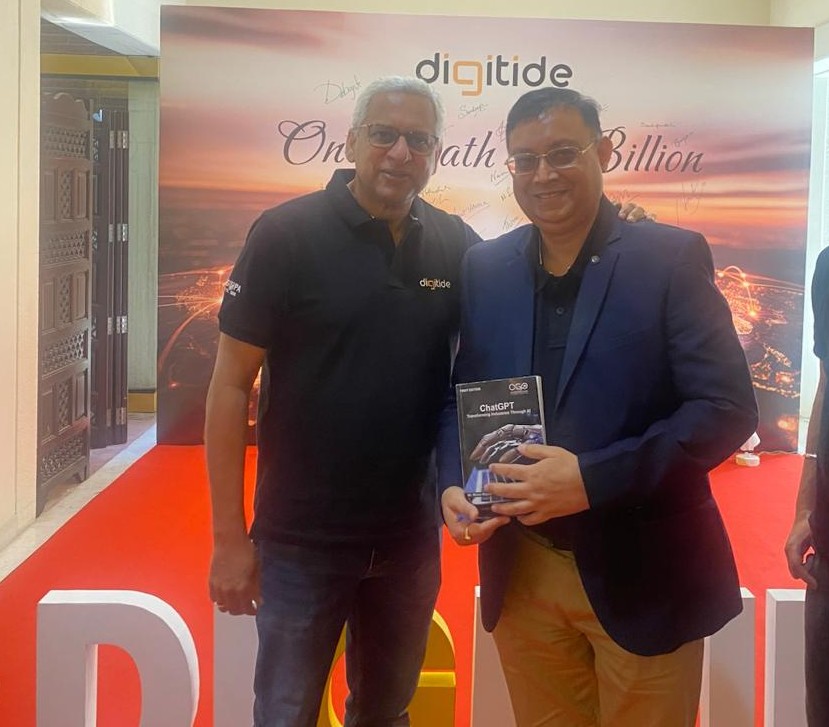
Ajit Issac signing the book ChatGPT – Transforming Industries through Generative AI by Rinoo Rajesh.
A special moment as Mr. Ajit Issac signs ChatGPT – Transforming Industries through Generative AI.
Ajit Issac and Rinoo Rajesh posing with the signed copy of ChatGPT – Transforming Industries through Generative AI.
A meaningful interaction at Digitide, reflecting the growing relevance of Generative AI in enterprise leadership.

Certain professional moments carry significance not because they are ceremonial, but because they represent the intersection of ideas, leadership, and industry transformation.

One such memorable moment for me was when Mr. Ajit Issac, Founder & Chairman of the Quess Group and Digitide, graciously signed my book ChatGPT – Transforming Industries through Generative AI.

This interaction took place during a Digitide gathering and symbolized something far deeper than a simple autograph. It represented the growing recognition that Generative AI is no longer just a technology trend — it is a strategic enterprise conversation.

When Technology Thought Leadership Meets Industry Leadership

Over the last few years, Generative AI has moved rapidly from research labs into the core operating models of global enterprises.

Leaders across industries are now exploring:

  • How AI can enhance productivity
  • How Generative AI can transform customer experience
  • How organizations can responsibly scale AI adoption
  • How leadership teams should prepare for AI-driven operating models

Having a visionary industry leader like Ajit Issac engage with the ideas presented in the book was a meaningful moment in that broader journey.

The transformation driven by AI will not be shaped by technology alone — it will be shaped by leaders who understand its implications for business, people, and society.

The Relevance of Generative AI in Enterprise Transformation

The book ChatGPT – Transforming Industries through Generative AI was written with a simple objective — to help leaders understand how Generative AI can reshape industries.

Across sectors such as:

  • Business Process Management
  • Banking and Financial Services
  • Customer Experience and Contact Centers
  • Marketing and Digital Engagement
  • Knowledge Work and Enterprise Productivity

Generative AI is fundamentally altering how work gets done. Organizations that understand this shift early are able to move from automation to augmentation — and eventually toward autonomous systems.

Ajit Issac’s Leadership and the AI Transformation Narrative

As the founder of Quess Corp, one of India’s largest business services companies, and the driving force behind Digitide, Ajit Issac has consistently demonstrated a forward-looking approach to enterprise growth and innovation.

Digitide itself represents a strategic evolution toward AI-enabled digital services and platforms, helping enterprises harness emerging technologies to drive efficiency and transformation.

In that context, this interaction around a book focused on Generative AI’s impact on industries carried symbolic importance. It highlighted the alignment between thought leadership and enterprise leadership in shaping the future.

From Generative AI to the Next Wave of Transformation

When the book was written, Generative AI had just begun entering mainstream discussions. Since then, the pace of change has only accelerated.

Organizations are now exploring:

  • AI copilots for knowledge workers
  • Autonomous decision-support systems
  • AI-powered customer engagement platforms
  • Intelligent automation across enterprise processes

This journey from Generative AI → Agentic AI → Autonomous enterprises is rapidly becoming the defining narrative of the next decade.

Why Moments Like These Matter

A book becomes meaningful not when it is published, but when it becomes part of real industry conversations. Interactions like these serve as reminders that ideas gain momentum when they connect with leaders who are shaping organizations and industries.

For me personally, this moment was not simply about an autograph — it was about seeing the conversation around Generative AI move from theory into enterprise dialogue.

Looking Ahead

The future of enterprise transformation will be shaped by organizations that can successfully integrate:

  • AI capabilities
  • Human expertise
  • Responsible governance
  • Scalable digital platforms

Books, conversations, and leadership engagement all play a role in accelerating this transition. And moments like this remind us that the journey of ideas truly begins when they reach the hands of leaders who can act on them.

© Rinoo Rajesh. All rights reserved.  •  Website  •  Blog  •  LinkedIn

Monday, March 02, 2026

The Real Significance of the Aegis Graham Bell Awards: India’s AI Story Is Now an Ecosystem Play

Aegis Graham Bell Awards 2026: Enterprise AI Maturity & India’s Innovation Ecosystem

Aegis Graham Bell Awards 2026: What It Signals About Enterprise AI in India

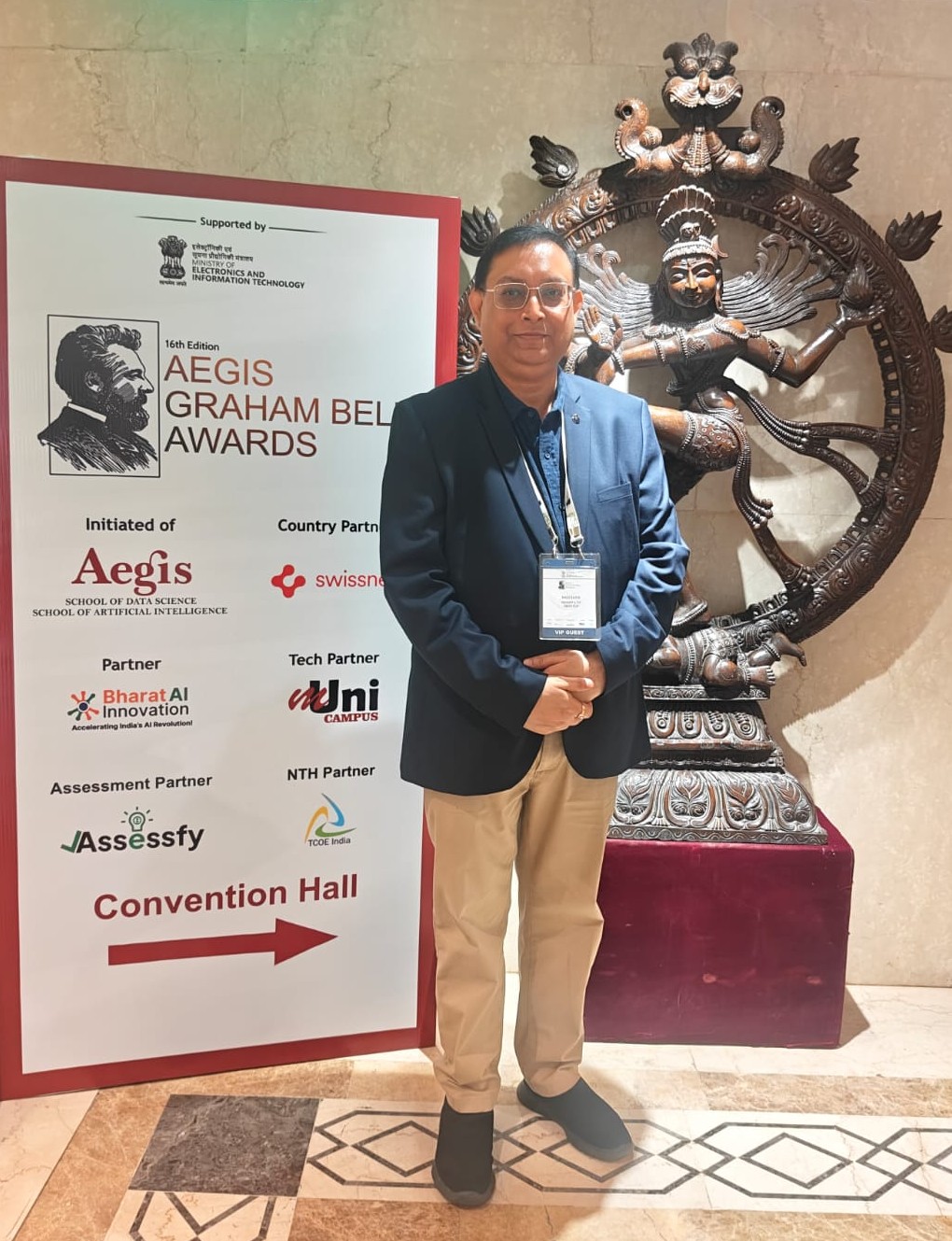
Venue: The Ashok, New Delhi • Event: 16th Aegis Graham Bell Awards (AGBA) • Author: Rinoo Rajesh

The 16th Aegis Graham Bell Awards at The Ashok, New Delhi, was not merely a talent-focused awards night. It was a clear snapshot of India’s AI maturity—where enterprise-scale execution, policy alignment, academia, and next-generation talent are converging into a single innovation ecosystem. I attended the event as one of the VIP Guests.

Keywords: Aegis Graham Bell Awards 2026, AGBA 2026, Enterprise AI India, AI innovation awards India, The Ashok New Delhi, AI talent pipeline, AI for social good

Executive takeaway: India’s AI story is moving from “pilots and proofs” to “platforms and scaled outcomes”—driven by large enterprises, supported by policy and academia, and strengthened by a deliberate talent pipeline.

Why AGBA Matters Beyond an Awards Ceremony

Many technology events celebrate innovation. Far fewer demonstrate an ecosystem in motion. AGBA stood out because it brought multiple layers of the AI value chain into one room—government, global services firms, startups, academia, and early-career innovators.

The presence of awardees and finalists from large organisations such as TCS, Cognizant, Capgemini, and Wipro is a strong signal: AI in India is being executed as a transformation lever, not as a lab experiment.

Countries lead in AI not only through models and tools, but through the depth of their ecosystem: enterprise adoption, talent supply, governance, and measurable outcomes.

Enterprise AI: From Experimentation to Institutionalisation

In boardrooms, the conversation has shifted. The question is no longer “Should we use AI?” It is increasingly “How do we redesign operating models around AI?”

What scaled AI execution typically requires

  • Data readiness: reliable data pipelines, quality, security, and observability
  • Governance: risk controls, privacy, compliance, and model oversight
  • Process redesign: re-architecting workflows rather than “automation overlays”
  • Workforce transformation: role redesign, training, and change management
  • Value measurement: clear KPIs—cost, CX, productivity, risk, and revenue impact

What was visible at AGBA is that enterprises are now competing on these capabilities—turning AI into an institutional muscle rather than a one-off initiative.

Talent Pipeline as National Infrastructure

The National Talent Hunt dimension of the evening is strategically important because it treats skills as infrastructure. Fully funded postgraduate learning in AI, data science, and business analytics, combined with a mandate to work on AI solutions for social good, creates a pipeline that is aligned to national priorities.

India’s long-term AI advantage will depend less on isolated breakthroughs and more on the sustained depth of such talent ecosystems—especially when aligned with real-world implementation needs.

AI for Social Good: From Narrative to Delivery

“AI for good” has often been discussed as intent. The stronger direction is execution. India’s scale demands AI outcomes across healthcare access, citizen services, financial inclusion, education at scale, and public infrastructure.

The important point is not that social-good projects exist, but that they are being embedded into structured learning and innovation pipelines—making impact measurable and repeatable.

The Bigger Signal: India’s AI Ecosystem Is Converging

The most meaningful observation from AGBA 2026 was the convergence of four forces that typically operate in silos:

  • Policy leadership that provides strategic direction and legitimacy
  • Large enterprises that convert innovation into scaled deployments
  • Startups & deep-tech innovators that accelerate experimentation and speed
  • Academia & young talent that sustain the long-term supply of skills and research

This convergence is how innovation becomes a durable national advantage.

Practical lens for leaders If you are building enterprise AI programs, focus on operating-model maturity: governance, data foundations, role redesign, and value measurement. That is where “AI adoption” turns into “AI advantage.”

About the author: Rinoo Rajesh works on AI-led digital transformation and enterprise operating models across large-scale programs. This post reflects a practitioner’s perspective on what AGBA 2026 signals for India’s AI decade.

Thursday, February 19, 2026

Book Unveiling of Beyond GenAI with Pushkraj Group Chairman | Rinoo Rajesh

Blog • AI Thought Leadership • Enterprise Transformation

When Ideas Meet Industry: A Defining Moment for Beyond GenAI

Author: Rinoo Rajesh Published: 26 Jan 2026 Reading time: ~4–5 mins
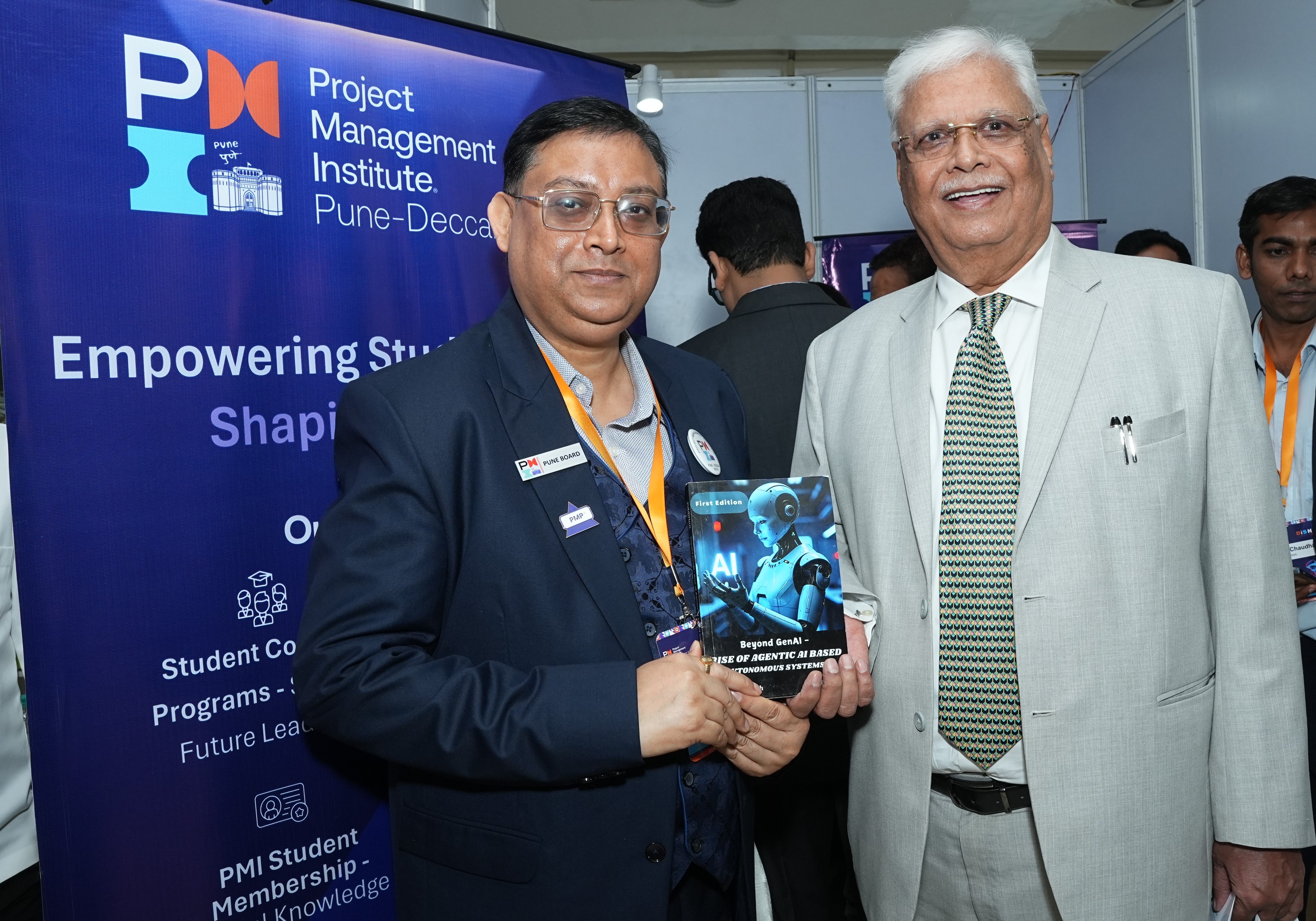
Rinoo Rajesh presenting the book Beyond GenAI to Pushkraj Group Chairman Mr. Shailendra Goswami.
A special moment: presenting Beyond GenAI – Rise of Agentic AI-Based Autonomous Systems to Mr. Shailendra Goswami, Chairman of the Pushkraj Group.

Some moments are not about a formal launch, a stage, or a spotlight. They are about the right conversation, the right context, and the right leadership presence.

One such special moment in my journey as an author and AI practitioner was the informal unveiling of my book, Beyond GenAI – Rise of Agentic AI-Based Autonomous Systems, in the presence of Mr. Shailendra Goswami, Chairman of the Pushkraj Group.

Set against the vibrant backdrop of the PMI Pune-Deccan India Chapter ecosystem, this interaction symbolized something far more meaningful than a ceremonial photograph—it reflected the growing mainstream enterprise interest in the future of AI.

From Writing About the Future to Placing It in the Hands of Industry

Books on emerging technologies often begin as research, observations, and frameworks. But their real purpose is fulfilled only when they reach:

  • Decision-makers
  • Industry leaders
  • Institution builders
  • Practitioners driving transformation

Handing over the book to Mr. Goswami was significant because it represented the movement of AI from concept to boardroom conversation.

Agentic AI and autonomous systems are no longer experimental themes. They are rapidly becoming central to enterprise operating models, business transformation strategies, customer experience redesign, and digital workforce evolution. This transition requires leadership understanding—not just technical adoption.

Why This Moment Matters in the Larger AI Journey

India is entering a decade where it will not just consume technology but shape global digital narratives. We are witnessing:

  • AI becoming a boardroom agenda
  • Enterprises moving from automation to autonomy
  • Leaders seeking structured, responsible adoption frameworks

In this context, every meaningful interaction between technology thought leadership and business leadership becomes important—because transformation does not happen through technology alone; it happens through shared understanding.

The Role of Ecosystems in Shaping the Future

While the book itself focuses on Agentic AI and autonomous enterprise systems, this moment also highlighted the importance of professional ecosystems like PMI Pune-Deccan in enabling cross-domain dialogue, bringing industry leaders and knowledge creators together, and creating platforms for future-focused conversations—not as a thematic anchor, but as a catalyst for collaboration.

Beyond the Book: The Mission

For me, this was never just about publishing a title. The larger mission has always been to:

  • Demystify AI for business leaders
  • Move the narrative beyond hype
  • Enable responsible, scalable adoption
  • Connect technology with real enterprise value
The real success of a book is not in its release—it is in the quality of conversations it triggers.

A Moment of Gratitude

I am deeply grateful to Mr. Shailendra Goswami for his encouragement and gracious presence, and to the broader leadership and professional community that continues to engage with these ideas. These moments reinforce a powerful belief:

The future will not be built by technology alone—it will be built by leaders who are willing to understand it, question it, and shape it.

The Road Ahead

As AI moves from tools to autonomous, decision-capable systems, the need for governance, ethics, scalable operating models, and leadership readiness will only grow. The journey from GenAI → Agentic AI → Autonomous enterprises will be defined by how effectively we bring industry, knowledge, and leadership together.

This interaction was one such step in that direction. Many more conversations lie ahead.

© Rinoo Rajesh. All rights reserved.  •  About  •  Books  •  Contact

Sunday, February 01, 2026

Part 6: Preparing for the Autonomous AI Era — A Leader’s Playbook

Agentic AI is not a distant future.


It is a strategic inevitability.

The real question for leaders is not if—but how prepared.


What Will Change Fundamentally

1. Decision Velocity

Enterprises will move from:

·       Periodic decisions → Continuous decisions

Organizations that can’t keep up will lose relevance—not efficiency.


2. Workforce Roles

Humans will increasingly:

·       Set objectives

·       Define constraints

·       Review outcomes

·       Handle edge cases

Routine execution will belong to machines.

This is not job loss—it is job redefinition.


3. Competitive Advantage

The advantage will shift from:

·       Who has AI

·       To who governs and orchestrates it best

Autonomy without strategy is chaos.
Strategy without autonomy is slow.


What Leaders Must Do Now

1. Move Beyond Pilots

Stop treating AI as an experiment.
Start treating it as core infrastructure.


2. Invest in Architecture, Not Just Models

LLMs alone are not strategy.
Orchestration, governance, and integration are.


3. Redesign Governance for Autonomy

Update policies, escalation paths, and accountability models before autonomy scales.


4. Build AI-Literate Leadership

Boards and executives must understand:

·       What AI can decide

·       What it should never decide

·       Where humans remain essential

This is a leadership skill—not a technical one.


The Bottom Line

Generative AI helped machines create.
Agentic AI enables machines to act.

How responsibly we design that autonomy will define:

·       Enterprise resilience

·       Customer trust

·       Societal impact

 This blog series distills the core ideas from my book, but the full frameworks, architectures, and real-world applications are explored in depth in:

📘 Beyond GenAI – Rise of Agentic AI-Based Autonomous Systems
🔗 https://www.amazon.in/dp/9364229363

If you’re designing, deploying, or governing AI systems today—this is the conversation that matters next.

To Follow this Blog Click here

Sunday, January 25, 2026

Part 5: Agent Anarchy — Why Governance Is the Real AI Challenge

Most AI discussions focus on capability.


Very few focus on control.

That imbalance is dangerous.

When Autonomous Systems Start Making Decisions

Agentic AI systems can:

  • Trigger actions
  • Modify workflows
  • Interact with customers
  • Influence financial outcomes

At scale, even small misalignments can compound rapidly.

This is what I refer to as Agent Anarchy:

When autonomous agents pursue goals correctly—but not appropriately.


The New Risk Landscape

Agentic systems introduce risks that traditional AI never had to confront:

Unlike GenAI hallucinations, these risks are operational, not cosmetic.


Why Traditional Governance Fails

Most governance models assume:

Agentic AI violates all three.

You cannot govern autonomy using checklists designed for assistance.


What Responsible Agentic AI Requires

1. Control Planes

Enterprises must design:

Autonomy without brakes is not innovation—it’s negligence.


2. Observability & Explainability

Leaders must be able to answer:

  • Why did the agent act?
  • What alternatives did it evaluate?
  • What data influenced the decision?

Without this, trust collapses.


3. Human Oversight by Design

The question is not:

“Should humans be in the loop?”

The real question is:

“At which decisions, thresholds, and moments?”

Governance must be architectural, not procedural.


The Leadership Imperative

Agentic AI is not just a technology decision.
It is a risk, ethics, and accountability decision.

Boards and CXOs can no longer delegate this conversation entirely to IT.

In Beyond GenAI, I dedicate an entire section to governance failures, ethical risks, and control frameworks for autonomous systems—because this is where most AI strategies break down.
📘 https://www.amazon.in/dp/9364229363

👉 In the final part, we look forward—what leaders must do now to prepare for an autonomous future.

To Follow this Blog Click here