Friday, March 27, 2026

EV Battery Technology: From Cell to Pack to Ecosystem – Key Insights from Industry Leaders

EV Battery Technology: From Cell to Pack to Ecosystem – Key Insights

EV Battery Technology: From Cell to Pack to Ecosystem Transformation

The global electric vehicle (EV) revolution is often framed as a shift in mobility.

In reality, it is far more fundamental.
It is a battery-led transformation of the entire mobility ecosystem—impacting design, manufacturing, supply chains, and even business models.

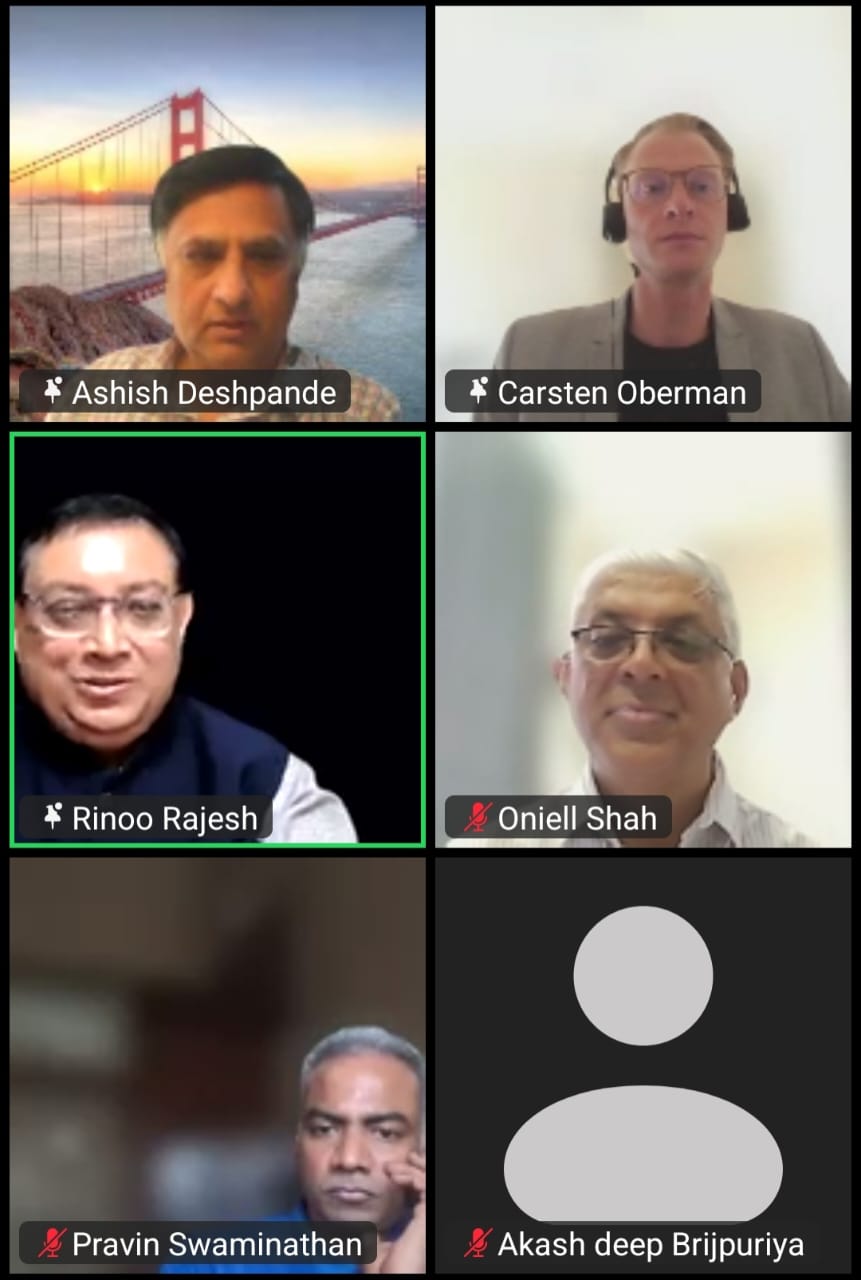
Recently, as part of the IIM Bangalore Alumni Mobility SIG initiative, I had the opportunity to moderate a fireside discussion with two distinguished industry leaders:

  • Carsten Obermann, Head of Battery Programs, Webasto Korea
  • Ashish Deshpande, Head of R&D, Kalyani Powertrain

What emerged from this conversation was not just a set of technical insights—but a clear picture of how the EV battery landscape is evolving at multiple levels simultaneously.

From Cell to Pack: A Fundamental Redesign

One of the most important shifts in EV battery technology today is the move from:

  • Cell-level optimization → Pack-level integration → Structural batteries

This is not incremental innovation.

It is a complete rethinking of how batteries are designed and integrated into vehicles.

Cell-to-pack and cell-to-chassis architectures are:

  • Improving energy density
  • Reducing weight and cost
  • Enhancing structural efficiency

However, they also introduce complex engineering challenges, especially around:

  • Thermal management
  • Safety and durability
  • Repairability and lifecycle management

The future of EV batteries lies not just in chemistry—but in system-level design excellence.

Gigafactories and Manufacturing as a Competitive Moat

A major theme that emerged was the growing importance of cell manufacturing technologies and gigafactories.

Gigafactories are no longer just about scaling production. They are becoming:

  • Strategic assets for supply chain control
  • Enablers of cost leadership
  • Drivers of process standardization and efficiency

Competitive advantage is shifting from chemistry to manufacturing scale and execution capability.

The Reality of Scaling: Where Innovation Breaks

While innovation in EV batteries is accelerating, many ideas fail not in the lab—but during scale-up.

Key challenges include:

  • Transitioning from pilot to production
  • Maintaining quality and consistency
  • Managing cost pressures
  • Ensuring supply chain readiness

Execution—not ideation—is the real bottleneck.

Localization: Beyond Policy to Execution

For markets like India, localization is often viewed as a policy lever.

In reality, it requires:

  • Deep ecosystem development
  • Robust supplier networks
  • Access to raw materials and components
  • Long-term partnership models

Localization is a capability-building journey—not a checkbox.

AI and the Rise of Intelligent Battery Systems

Batteries are increasingly becoming software-defined systems.

AI is enabling:

  • Advanced battery management systems (BMS)
  • Predictive performance and degradation analysis
  • Digital twins for lifecycle optimization

This marks a shift from hardware-centric engineering to intelligence-driven systems.

From Product to Ecosystem

The EV battery landscape is evolving into an ecosystem-driven model.

Key players include:

  • OEMs
  • Battery manufacturers
  • Energy companies
  • Technology providers

The key question is no longer:

Who builds the best battery?

But:

Who controls the value chain?

India’s Opportunity: From Participation to Leadership

India stands at a critical juncture in the EV transition.

The opportunity lies in:

  • Building manufacturing scale
  • Strengthening supply chains
  • Investing in R&D
  • Driving global partnerships

The goal should be to lead—not just participate—in the EV ecosystem.

Conclusion

The EV revolution is not just about electrification.

It is about the redefinition of mobility, manufacturing, and energy systems.

From:

  • Cell → Pack → Platform
  • Product → Ecosystem
  • Hardware → Intelligence

The transformation is deep and irreversible.

The question is—will we adapt to it, or lead it?


Tags: EV Battery Technology, Cell to Pack, Gigafactories, EV India, Battery Innovation, Energy Storage, AI in Batteries


Friday, March 13, 2026

The Age of AI Oligarchs: Who Really Decides the Future of Humanity?

The Age of AI Oligarchs: Who Really Decides the Future of Humanity?

Blog • AI Thought Leadership • Society • Governance

The Age of AI Oligarchs: Who Really Decides the Future of Humanity?

Author: Rinoo Rajesh Published: 13 Mar 2026 Reading time: ~6 mins

When Bill Gates first emerged as one of the defining symbols of modern technology wealth in the early 1990s, the world’s billionaire landscape looked very different. Wealth was spread across industries such as retail, manufacturing, real estate, packaging, finance, and media. Technology was important, but it had not yet become the central force shaping the direction of human civilization.

Fast forward to today, and the picture has changed dramatically. Many of the world’s most powerful billionaires now come from high technology. Their companies do not merely create products or services. They shape platforms, algorithms, digital ecosystems, and increasingly, the direction of artificial intelligence itself.

This is not just a story about money. It is a story about who gets to influence the next phase of humanity.

The New Concentration of Power

In earlier eras, industrialists and business magnates influenced economies, markets, and employment. Today’s technology leaders influence something far deeper: how billions of people communicate, work, learn, consume information, and increasingly, how machines may think and act on our behalf.

That makes the current moment unusual. For perhaps the first time in history, a relatively small group of technology elites is in a position to shape the future of intelligence itself.

This is where the conversation becomes more serious. The question is no longer simply whether AI will transform industries. It is whether a narrow set of powerful actors will define the terms on which that transformation unfolds.

Beyond Innovation: The Civilizational Question

Artificial intelligence is often discussed in terms of productivity, automation, and efficiency. Those are important dimensions, but they are no longer the only ones.

Increasingly, some of the most influential voices in technology speak about AI in far more ambitious terms: as a pathway to artificial general intelligence, digital consciousness, human-machine integration, and even a post-biological future.

These ideas may sound futuristic, but they are no longer confined to science fiction. They are becoming part of mainstream strategic thinking in parts of the technology world.

That raises several profound questions:

  • Should humanity actively pursue human-level or superhuman AI?
  • Who decides how far and how fast this development should go?
  • What happens to work, wages, and economic redistribution if AI transforms labor markets at scale?
  • How much power, capital, and energy should be directed toward this vision of the future?

These are not just technical questions. They are societal, ethical, political, and civilizational questions.

Why the AI Oligarchy Debate Matters

The real concern is not that wealthy people are interested in technology. Wealth has always backed innovation. The deeper issue is that the current technological revolution is being driven by individuals whose influence extends far beyond traditional business leadership.

Many of them genuinely believe that technology offers the most effective answer to nearly every human problem. In some ways, that optimism has been a driver of extraordinary progress. But it can also create blind spots.

Housing, healthcare, food affordability, social security, democratic accountability, and everyday economic anxieties do not always sit at the center of techno-utopian visions. Yet these are the realities most people live with every day.

The future of intelligence should not be shaped only by those who build the machines, but also by the societies that will live with the consequences.

The Shift from Human-Centered to System-Centered Thinking

One of the more unsettling aspects of this moment is the subtle shift in language and priorities. In some AI circles, the conversation is no longer solely about improving human life. It is about creating the next stage of intelligence, whether or not that stage remains centered on humans as we know them.

Some see humanity as a bridge to something more advanced. Others imagine a future in which biological and digital intelligence merge. Still others believe machine intelligence will eventually surpass and perhaps even replace many of the cognitive functions that currently define human uniqueness.

Whether one views these ambitions as visionary or alarming, they point to a reality we can no longer ignore: the stakes of AI are far bigger than productivity software or chatbots.

History Offers Perspective — But Not Comfort

It is true that every technological revolution has produced fear. The Industrial Revolution, electricity, mechanization, computers, and the internet all triggered predictions of job loss, social collapse, or permanent inequality. In many cases, humanity adapted, new industries emerged, and living standards improved.

Artificial intelligence may also create tremendous gains. It may improve healthcare, accelerate scientific discovery, unlock new forms of productivity, and democratize access to expertise.

But today’s AI revolution is different in one critical way: its development is happening at extraordinary speed, under the influence of an exceptionally small number of firms and individuals, with limited public participation in setting the boundaries.

Why Governance Cannot Be an Afterthought

If AI is going to reshape economies, institutions, and perhaps even our conception of intelligence, then governance cannot remain a secondary issue.

The future of AI must involve more than founders, investors, and engineers. It must include policymakers, educators, ethicists, economists, business leaders, civil society, and citizens.

We need public debate not because innovation should be slowed for the sake of it, but because the consequences of unchecked technological concentration can be profound.

A technology this powerful cannot be left entirely to market incentives and private ambition.

A Time for Collective Reflection

Looking back, the billionaires of earlier decades seem almost modest in their ambitions. They built supermarkets, industrial enterprises, real estate portfolios, and consumer goods businesses. They influenced economies, but they were not actively trying to architect the next form of intelligence.

Today, some of the most powerful figures in technology are attempting something much bigger: to shape the systems that may define the next era of human civilization.

That should inspire curiosity, caution, and above all, deeper public engagement.

The Way Forward

Artificial intelligence will move forward. That much is certain. The more important question is whether it will evolve within a framework that remains accountable to human values, social wellbeing, and democratic legitimacy.

The challenge before us is not to reject innovation. It is to ensure that innovation does not become detached from humanity itself.

The future should not be written by a technological elite alone. It should be shaped through a broader and more inclusive conversation about what kind of world we want to create.

© Rinoo Rajesh. All rights reserved.  •  Website  •  Blog  •  LinkedIn

Wednesday, March 11, 2026

When Industry Leaders Engage with Ideas: Ajit Issac Signing ChatGPT – Transforming Industries through Generative AI

Ajit Issac Signing ChatGPT – Transforming Industries through Generative AI | Rinoo Rajesh

Blog • Generative AI • Enterprise Transformation

When Industry Leaders Engage with Ideas: Ajit Issac Signing ChatGPT – Transforming Industries through Generative AI

Author: Rinoo Rajesh Reading time: ~4–5 mins
Ajit Issac signing the book ChatGPT – Transforming Industries through Generative AI by Rinoo Rajesh.
A special moment as Mr. Ajit Issac signs ChatGPT – Transforming Industries through Generative AI.
Ajit Issac and Rinoo Rajesh posing with the signed copy of ChatGPT – Transforming Industries through Generative AI.
A meaningful interaction at Digitide, reflecting the growing relevance of Generative AI in enterprise leadership.

Certain professional moments carry significance not because they are ceremonial, but because they represent the intersection of ideas, leadership, and industry transformation.

One such memorable moment for me was when Mr. Ajit Issac, Founder & Chairman of the Quess Group and Digitide, graciously signed my book ChatGPT – Transforming Industries through Generative AI.

This interaction took place during a Digitide gathering and symbolized something far deeper than a simple autograph. It represented the growing recognition that Generative AI is no longer just a technology trend — it is a strategic enterprise conversation.

When Technology Thought Leadership Meets Industry Leadership

Over the last few years, Generative AI has moved rapidly from research labs into the core operating models of global enterprises.

Leaders across industries are now exploring:

  • How AI can enhance productivity
  • How Generative AI can transform customer experience
  • How organizations can responsibly scale AI adoption
  • How leadership teams should prepare for AI-driven operating models

Having a visionary industry leader like Ajit Issac engage with the ideas presented in the book was a meaningful moment in that broader journey.

The transformation driven by AI will not be shaped by technology alone — it will be shaped by leaders who understand its implications for business, people, and society.

The Relevance of Generative AI in Enterprise Transformation

The book ChatGPT – Transforming Industries through Generative AI was written with a simple objective — to help leaders understand how Generative AI can reshape industries.

Across sectors such as:

  • Business Process Management
  • Banking and Financial Services
  • Customer Experience and Contact Centers
  • Marketing and Digital Engagement
  • Knowledge Work and Enterprise Productivity

Generative AI is fundamentally altering how work gets done. Organizations that understand this shift early are able to move from automation to augmentation — and eventually toward autonomous systems.

Ajit Issac’s Leadership and the AI Transformation Narrative

As the founder of Quess Corp, one of India’s largest business services companies, and the driving force behind Digitide, Ajit Issac has consistently demonstrated a forward-looking approach to enterprise growth and innovation.

Digitide itself represents a strategic evolution toward AI-enabled digital services and platforms, helping enterprises harness emerging technologies to drive efficiency and transformation.

In that context, this interaction around a book focused on Generative AI’s impact on industries carried symbolic importance. It highlighted the alignment between thought leadership and enterprise leadership in shaping the future.

From Generative AI to the Next Wave of Transformation

When the book was written, Generative AI had just begun entering mainstream discussions. Since then, the pace of change has only accelerated.

Organizations are now exploring:

  • AI copilots for knowledge workers
  • Autonomous decision-support systems
  • AI-powered customer engagement platforms
  • Intelligent automation across enterprise processes

This journey from Generative AI → Agentic AI → Autonomous enterprises is rapidly becoming the defining narrative of the next decade.

Why Moments Like These Matter

A book becomes meaningful not when it is published, but when it becomes part of real industry conversations. Interactions like these serve as reminders that ideas gain momentum when they connect with leaders who are shaping organizations and industries.

For me personally, this moment was not simply about an autograph — it was about seeing the conversation around Generative AI move from theory into enterprise dialogue.

Looking Ahead

The future of enterprise transformation will be shaped by organizations that can successfully integrate:

  • AI capabilities
  • Human expertise
  • Responsible governance
  • Scalable digital platforms

Books, conversations, and leadership engagement all play a role in accelerating this transition. And moments like this remind us that the journey of ideas truly begins when they reach the hands of leaders who can act on them.

© Rinoo Rajesh. All rights reserved.  •  Website  •  Blog  •  LinkedIn

Sunday, March 08, 2026

AI and Digital Transformation: A Step-by-Step Guide for BPOs

AI and Digital Transformation: A Step-by-Step Guide for BPOs

By Rinoo Rajesh

The BPO industry has entered a new phase. Cost efficiency still matters, of course, but it is no longer the full story. Today, the more relevant question is this: can a BPO become faster, smarter, more predictive, and more valuable to clients at the same time?

Recent research suggests the answer is yes—but only when AI is embedded into the operating model, not treated as a shiny side project. McKinsey notes that contact centers are being reshaped by AI-led redesign, while Deloitte reports that enterprise AI adoption is moving from experimentation toward scaled deployment in 2025 and 2026.

From my perspective, BPO leaders should think of digital transformation less like “installing software” and more like rebuilding an aircraft while keeping it in the air. You cannot pause service delivery. You need to modernize while staying compliant, productive, and client-ready. That is why a step-by-step approach works best.

Step 1: Start with Business Outcomes, Not Tools

Do not begin with “We need GenAI” or “Let’s deploy agents.” Begin with measurable outcomes: reduce average handling time, improve first-contact resolution, lower collections leakage, raise QA consistency, or accelerate onboarding.

McKinsey has observed that digitally integrated outsourcing arrangements can create significantly greater impact than traditional models, especially when transformation is tied to business value rather than labor substitution alone.

Step 2: Prioritize High-Volume, Repeatable Use Cases

The best early wins in BPOs usually come from agent assist, automated call summarization, knowledge retrieval, email drafting, quality monitoring, workflow orchestration, fraud and risk flags, and collections prioritization.

IBM’s recent customer service research highlights how AI is increasingly used to personalize interactions, automate routine support, and uncover new productivity gains in service environments.

A practical example? A customer support BPO can deploy real-time agent assist to surface the next best response, policy prompts, and compliance reminders during live calls. In collections, AI can score accounts, suggest resolution paths, and optimize outreach timing. These are not futuristic ideas anymore; they are fast becoming baseline capabilities.

Step 3: Build a Digital Core Before Chasing Autonomy

This is where many firms stumble. Everyone wants agentic AI, but messy data, fragmented CRMs, weak APIs, and inconsistent SOPs can kill momentum. Accenture’s 2025 work on agentic AI argues that these systems are most effective when connected across enterprise platforms, while PwC’s governance research emphasizes inventory, monitoring, and management of AI use cases as foundational practices.

So yes, ambition is good. But before autonomous workflows, fix the plumbing: unified knowledge bases, clean process maps, workflow engines, audit logs, and secure data access.

Step 4: Redesign the Workforce, Don’t Just Automate Tasks

The leading BPO of 2026 will not be “human-only” or “AI-only.” It will be a human-plus-digital-labor model. Microsoft’s 2025 Work Trend Index points to the emergence of firms that combine human teams with AI agents, and Deloitte has forecast that enterprise use of AI agents will continue to rise sharply through 2027.

What does that mean on the ground? Agents become exception handlers, empathy anchors, and judgment-led problem solvers. Supervisors become performance coaches supported by AI insights. QA teams shift from random sampling to continuous intelligence. Frankly, this is a better job design than forcing people to do robotic work all day.

Step 5: Put Governance at the Center

This part is not glamorous, but it is non-negotiable. AI in BPOs touches customer data, financial records, regulated workflows, and brand reputation. PwC’s India-focused guidance stresses that enterprises need lifecycle governance aligned with emerging national AI governance expectations. At the same time, public reporting on Gartner’s 2025 analysis warns that many agentic AI programs may fail because of poor business clarity, inflated expectations, and weak controls.

In plain language: if you cannot explain who owns the model, what data it sees, how it is monitored, and when a human overrides it, you are not ready to scale.

Step 6: Measure Transformation Like a Portfolio

Track value in waves: productivity, quality, compliance, customer experience, revenue uplift, and resilience. Everest Group’s 2025 outlook also points to outcome-based transformation models gaining ground, which is particularly relevant for BPOs seeking to move from effort-based contracts to value-led partnerships.

The future-forward trend is clear: BPOs will evolve into AI-enabled operations partners, not just outsourced service vendors. The winners will combine platform thinking, workflow intelligence, domain depth, and trusted governance. That shift is already underway.

If you are a CXO, transformation leader, or BPO strategist wondering where to begin, begin small—but begin with intent. A focused use case, the right governance, and disciplined scaling can change the trajectory of the enterprise faster than most teams expect.

Connect with Rinoo Rajesh

To discuss how AI, digital transformation, and agentic operating models can reshape BPOs, connect with me through the following channels:


Monday, March 02, 2026

The Real Significance of the Aegis Graham Bell Awards: India’s AI Story Is Now an Ecosystem Play

Aegis Graham Bell Awards 2026: Enterprise AI Maturity & India’s Innovation Ecosystem

Aegis Graham Bell Awards 2026: What It Signals About Enterprise AI in India

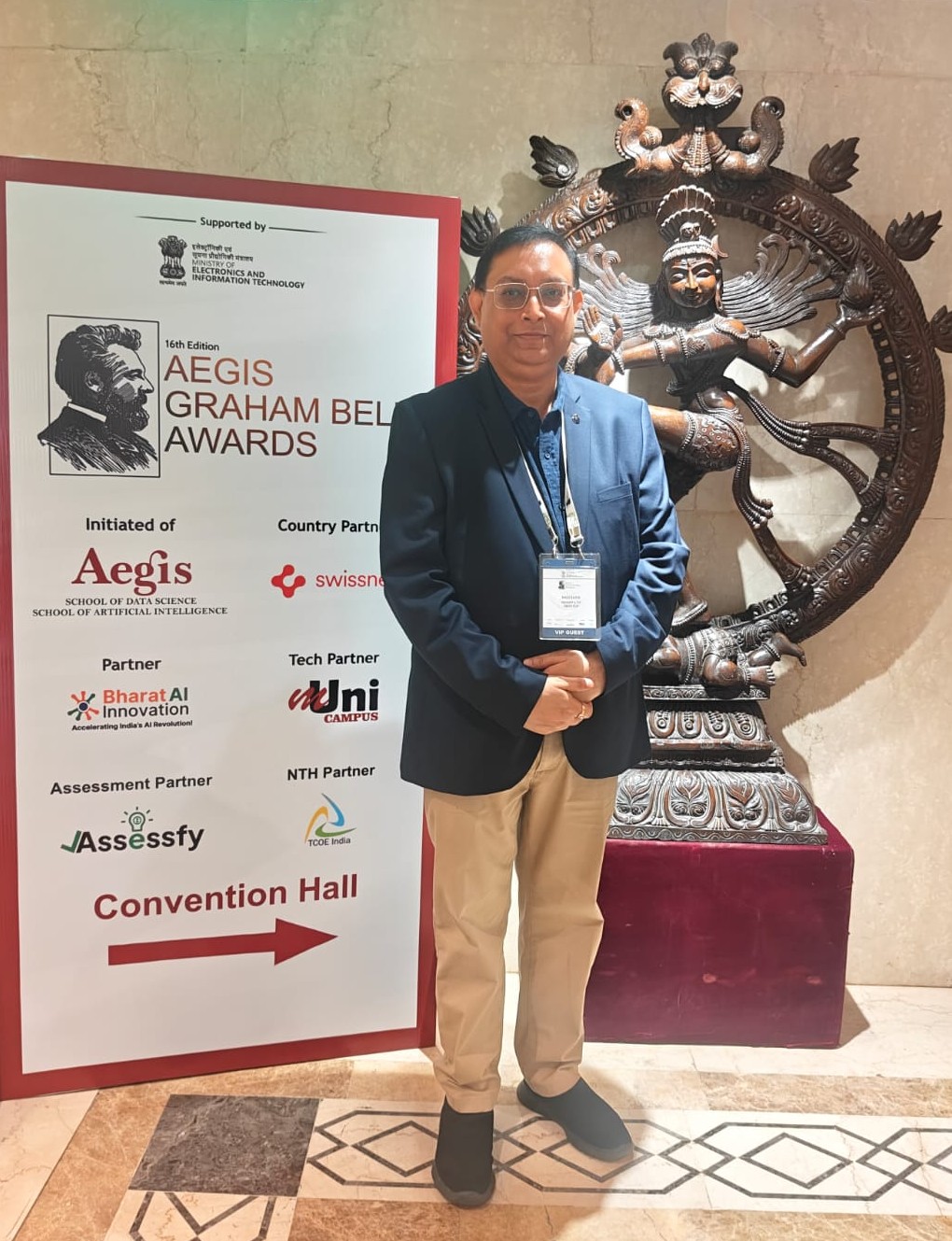
Venue: The Ashok, New Delhi • Event: 16th Aegis Graham Bell Awards (AGBA) • Author: Rinoo Rajesh

The 16th Aegis Graham Bell Awards at The Ashok, New Delhi, was not merely a talent-focused awards night. It was a clear snapshot of India’s AI maturity—where enterprise-scale execution, policy alignment, academia, and next-generation talent are converging into a single innovation ecosystem. I attended the event as one of the VIP Guests.

Keywords: Aegis Graham Bell Awards 2026, AGBA 2026, Enterprise AI India, AI innovation awards India, The Ashok New Delhi, AI talent pipeline, AI for social good

Executive takeaway: India’s AI story is moving from “pilots and proofs” to “platforms and scaled outcomes”—driven by large enterprises, supported by policy and academia, and strengthened by a deliberate talent pipeline.

Why AGBA Matters Beyond an Awards Ceremony

Many technology events celebrate innovation. Far fewer demonstrate an ecosystem in motion. AGBA stood out because it brought multiple layers of the AI value chain into one room—government, global services firms, startups, academia, and early-career innovators.

The presence of awardees and finalists from large organisations such as TCS, Cognizant, Capgemini, and Wipro is a strong signal: AI in India is being executed as a transformation lever, not as a lab experiment.

Countries lead in AI not only through models and tools, but through the depth of their ecosystem: enterprise adoption, talent supply, governance, and measurable outcomes.

Enterprise AI: From Experimentation to Institutionalisation

In boardrooms, the conversation has shifted. The question is no longer “Should we use AI?” It is increasingly “How do we redesign operating models around AI?”

What scaled AI execution typically requires

  • Data readiness: reliable data pipelines, quality, security, and observability
  • Governance: risk controls, privacy, compliance, and model oversight
  • Process redesign: re-architecting workflows rather than “automation overlays”
  • Workforce transformation: role redesign, training, and change management
  • Value measurement: clear KPIs—cost, CX, productivity, risk, and revenue impact

What was visible at AGBA is that enterprises are now competing on these capabilities—turning AI into an institutional muscle rather than a one-off initiative.

Talent Pipeline as National Infrastructure

The National Talent Hunt dimension of the evening is strategically important because it treats skills as infrastructure. Fully funded postgraduate learning in AI, data science, and business analytics, combined with a mandate to work on AI solutions for social good, creates a pipeline that is aligned to national priorities.

India’s long-term AI advantage will depend less on isolated breakthroughs and more on the sustained depth of such talent ecosystems—especially when aligned with real-world implementation needs.

AI for Social Good: From Narrative to Delivery

“AI for good” has often been discussed as intent. The stronger direction is execution. India’s scale demands AI outcomes across healthcare access, citizen services, financial inclusion, education at scale, and public infrastructure.

The important point is not that social-good projects exist, but that they are being embedded into structured learning and innovation pipelines—making impact measurable and repeatable.

The Bigger Signal: India’s AI Ecosystem Is Converging

The most meaningful observation from AGBA 2026 was the convergence of four forces that typically operate in silos:

  • Policy leadership that provides strategic direction and legitimacy
  • Large enterprises that convert innovation into scaled deployments
  • Startups & deep-tech innovators that accelerate experimentation and speed
  • Academia & young talent that sustain the long-term supply of skills and research

This convergence is how innovation becomes a durable national advantage.

Practical lens for leaders If you are building enterprise AI programs, focus on operating-model maturity: governance, data foundations, role redesign, and value measurement. That is where “AI adoption” turns into “AI advantage.”

About the author: Rinoo Rajesh works on AI-led digital transformation and enterprise operating models across large-scale programs. This post reflects a practitioner’s perspective on what AGBA 2026 signals for India’s AI decade.