Showing posts with label InnovationLeadership. Show all posts

Wednesday, March 11, 2026

When Industry Leaders Engage with Ideas: Ajit Issac Signing ChatGPT – Transforming Industries through Generative AI
Ajit Issac Signing ChatGPT – Transforming Industries through Generative AI | Rinoo Rajesh

Blog • Generative AI • Enterprise Transformation

When Industry Leaders Engage with Ideas: Ajit Issac Signing ChatGPT – Transforming Industries through Generative AI

Author: Rinoo Rajesh Reading time: ~4–5 mins
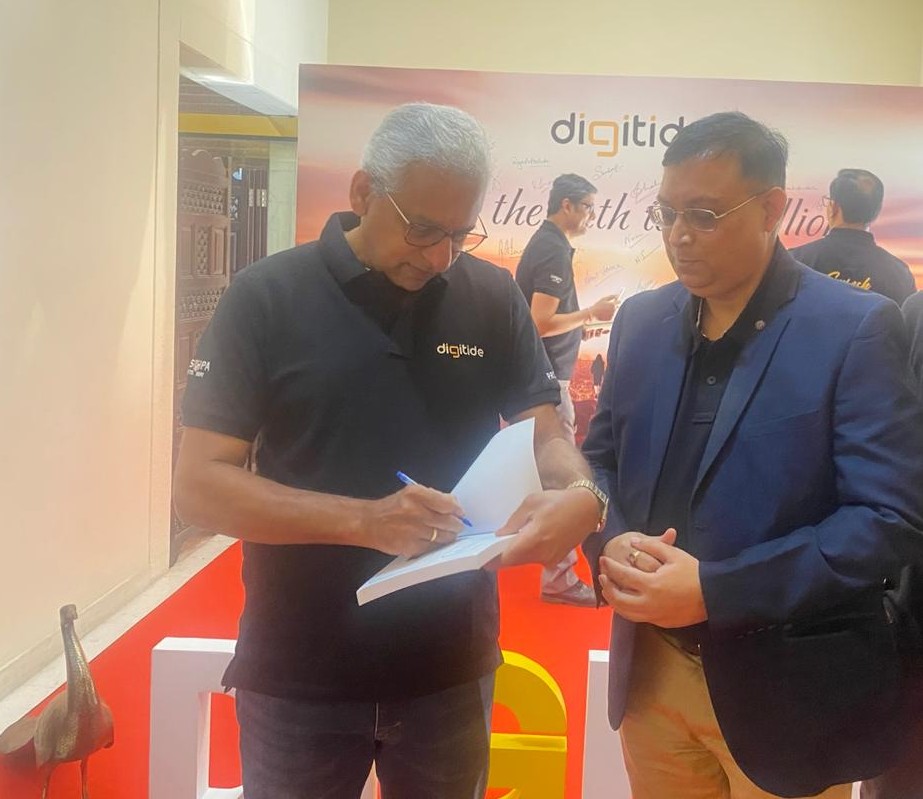
Ajit Issac signing the book ChatGPT – Transforming Industries through Generative AI by Rinoo Rajesh.
A special moment as Mr. Ajit Issac signs ChatGPT – Transforming Industries through Generative AI.
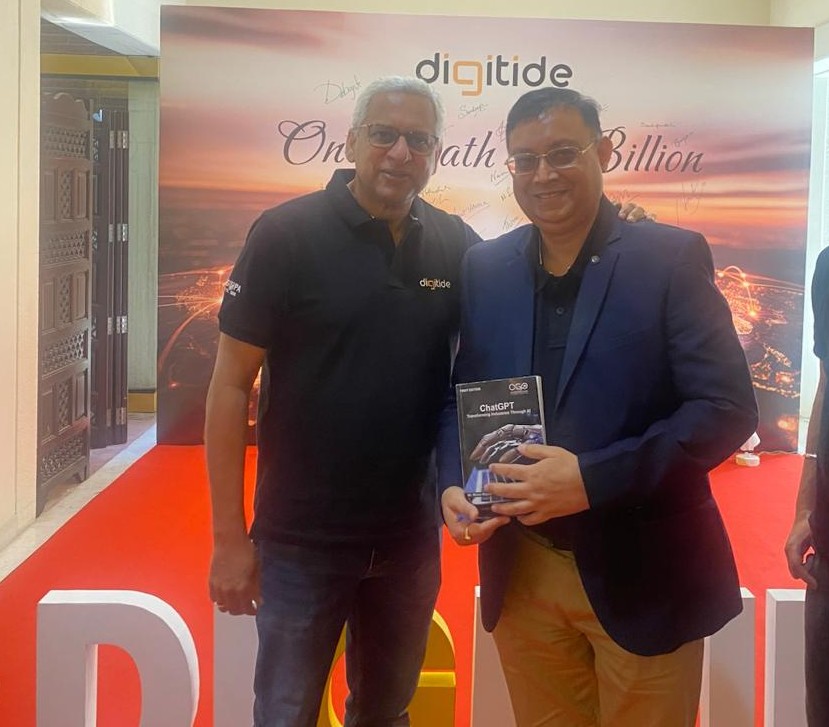
Ajit Issac and Rinoo Rajesh posing with the signed copy of ChatGPT – Transforming Industries through Generative AI.
A meaningful interaction at Digitide, reflecting the growing relevance of Generative AI in enterprise leadership.

Certain professional moments carry significance not because they are ceremonial, but because they represent the intersection of ideas, leadership, and industry transformation.

One such memorable moment for me was when Mr. Ajit Issac, Founder & Chairman of the Quess Group and Digitide, graciously signed my book ChatGPT – Transforming Industries through Generative AI.

This interaction took place during a Digitide gathering and symbolized something far deeper than a simple autograph. It represented the growing recognition that Generative AI is no longer just a technology trend — it is a strategic enterprise conversation.

When Technology Thought Leadership Meets Industry Leadership

Over the last few years, Generative AI has moved rapidly from research labs into the core operating models of global enterprises.

Leaders across industries are now exploring:

  • How AI can enhance productivity
  • How Generative AI can transform customer experience
  • How organizations can responsibly scale AI adoption
  • How leadership teams should prepare for AI-driven operating models

Having a visionary industry leader like Ajit Issac engage with the ideas presented in the book was a meaningful moment in that broader journey.

The transformation driven by AI will not be shaped by technology alone — it will be shaped by leaders who understand its implications for business, people, and society.

The Relevance of Generative AI in Enterprise Transformation

The book ChatGPT – Transforming Industries through Generative AI was written with a simple objective — to help leaders understand how Generative AI can reshape industries.

Across sectors such as:

  • Business Process Management
  • Banking and Financial Services
  • Customer Experience and Contact Centers
  • Marketing and Digital Engagement
  • Knowledge Work and Enterprise Productivity

Generative AI is fundamentally altering how work gets done. Organizations that understand this shift early are able to move from automation to augmentation — and eventually toward autonomous systems.

Ajit Issac’s Leadership and the AI Transformation Narrative

As the founder of Quess Corp, one of India’s largest business services companies, and the driving force behind Digitide, Ajit Issac has consistently demonstrated a forward-looking approach to enterprise growth and innovation.

Digitide itself represents a strategic evolution toward AI-enabled digital services and platforms, helping enterprises harness emerging technologies to drive efficiency and transformation.

In that context, this interaction around a book focused on Generative AI’s impact on industries carried symbolic importance. It highlighted the alignment between thought leadership and enterprise leadership in shaping the future.

From Generative AI to the Next Wave of Transformation

When the book was written, Generative AI had just begun entering mainstream discussions. Since then, the pace of change has only accelerated.

Organizations are now exploring:

  • AI copilots for knowledge workers
  • Autonomous decision-support systems
  • AI-powered customer engagement platforms
  • Intelligent automation across enterprise processes

This journey from Generative AI → Agentic AI → Autonomous enterprises is rapidly becoming the defining narrative of the next decade.

Why Moments Like These Matter

A book becomes meaningful not when it is published, but when it becomes part of real industry conversations. Interactions like these serve as reminders that ideas gain momentum when they connect with leaders who are shaping organizations and industries.

For me personally, this moment was not simply about an autograph — it was about seeing the conversation around Generative AI move from theory into enterprise dialogue.

Looking Ahead

The future of enterprise transformation will be shaped by organizations that can successfully integrate:

  • AI capabilities
  • Human expertise
  • Responsible governance
  • Scalable digital platforms

Books, conversations, and leadership engagement all play a role in accelerating this transition. And moments like this remind us that the journey of ideas truly begins when they reach the hands of leaders who can act on them.

© Rinoo Rajesh. All rights reserved.  •  Website  •  Blog  •  LinkedIn

Sunday, August 06, 2023

Strategic Management in the Modern World: Navigating the Dynamics of Success

 In the fast-paced and rapidly evolving modern world, strategic management has become the guiding compass for organizations seeking to thrive amidst uncertainty and disruption. The process of strategic management involves setting goals, making informed decisions, and aligning resources to achieve competitive advantage and sustainable growth. In this comprehensive article, we delve into the intricacies of strategic management in the contemporary business landscape.

The Evolution of Strategic Management

Strategic management has come a long way from its traditional roots, where it was primarily associated with long-term planning and rigid hierarchies. In today's dynamic world, it has evolved into a fluid and adaptive process that embraces change as a constant. Organizations now recognize the importance of agility and innovation as essential elements of strategic management.

"Our organization's success lies in our ability to continuously adapt and evolve our strategies to meet the changing needs of our customers and the market."

Strategic Planning vs. Strategic Management

While strategic planning is a component of strategic management, the two concepts are distinct. Strategic planning involves formulating a blueprint for achieving organizational goals, while strategic management encompasses the entire process of executing, monitoring, and adjusting those plans. It involves a cyclical approach of analyzing, strategizing, implementing, and evaluating to stay aligned with organizational objectives.

Strategic Management Framework:

1.                     Environmental Scanning and Analysis:

a.       Conduct a comprehensive analysis of the external environment, including market trends, competitors, and emerging technologies.

b.       Identify opportunities and threats that may impact the organization's success.

2.                     SWOT Analysis:

a.       Assess the organization's strengths, weaknesses, opportunities, and threats (SWOT).

b.       Leverage strengths, address weaknesses, seize opportunities, and mitigate threats.

3.                     Setting Strategic Goals:

a.       Establish clear and measurable strategic goals aligned with the organization's mission and vision.

b.       Define Key Performance Indicators (KPIs) to gauge progress.

4.                     Strategy Formulation:

a.       Develop strategies to achieve the set goals, considering the organization's resources and capabilities.

b.       Encourage cross-functional collaboration to foster innovative thinking.

5.                     Strategy Implementation:

a.       Translate strategies into actionable plans with defined responsibilities and timelines.

b.       Allocate resources effectively and communicate the strategic direction throughout the organization.

6.                     Monitoring and Evaluation:

a.       Continuously monitor performance against KPIs and assess the effectiveness of strategies.

b.       Be open to feedback and adjust strategies as needed.

Read more about this in the book that I have co-authored on the subject – Strategic Management – the book can be purchased from - https://www.flipkart.com/product/p/itme?pid=9789357621205  

Strategic Management in an Uncertain World

The modern world is characterized by volatility, uncertainty, complexity, and ambiguity (VUCA). As a result, traditional static strategic plans have given way to adaptive strategies that embrace change and respond to unforeseen challenges.

"Our adaptive strategic management approach allowed us to pivot quickly during the pandemic, leading to the successful launch of our online platform."


Data-Driven Decision Making

In the age of big data and advanced analytics, strategic decision-making has been revolutionized. Organizations now have access to vast amounts of data that can provide valuable insights and support informed decision-making.

"Data-driven insights enable us to identify emerging market trends and make informed decisions, giving us a competitive edge."

Innovating for Competitive Advantage

Innovation has become a key driver of competitive advantage. Organizations that foster a culture of innovation and encourage creativity among their employees are better positioned to adapt to changing market conditions.

"Our emphasis on fostering innovation has led to the development of disruptive technologies, solidifying our position as market leaders."

The Role of Strategic Leadership

Strategic management is not solely about formulating and implementing strategies; it requires visionary leadership to inspire and guide the organization towards its goals. Strategic leaders must be adept at anticipating trends, making tough decisions, and inspiring their teams to execute strategies effectively.

"As strategic leaders, we provide a clear vision and empower our teams to take ownership of their roles in achieving our strategic objectives."

Balancing Short-Term and Long-Term Objectives

Strategic management requires a delicate balance between short-term objectives and long-term vision. While organizations must deliver results in the short term, they must also invest in strategies that ensure sustainable growth in the long run.

"Our strategic decisions strike a balance between immediate market demands and positioning ourselves for future opportunities."

Strategic Management and Corporate Social Responsibility

In the modern world, stakeholders increasingly demand that organizations demonstrate a commitment to corporate social responsibility (CSR). Integrating CSR into strategic management not only enhances the organization's reputation but also contributes to sustainable and ethical business practices.

"Our strategic management approach is anchored in ethical business practices, ensuring positive social impact and environmental stewardship."

Conclusion

In conclusion, strategic management in the modern world is a dynamic and adaptive process that navigates the complexities of the business landscape. Organizations must embrace change, leverage data-driven insights, foster innovation, and balance short-term demands with long-term vision. Strategic leadership and a commitment to corporate social responsibility are essential for achieving sustainable growth and enduring success. As the world continues to evolve, strategic management remains the compass that guides organizations towards their desired future.

Read more about this in the book that I have co-authored on the subject – Strategic Management – the book can be purchased from - https://www.flipkart.com/product/p/itme?pid=9789357621205