Aegis Graham Bell Awards 2026: What It Signals About Enterprise AI in India
The 16th Aegis Graham Bell Awards at The Ashok, New Delhi, was not merely a talent-focused awards night. It was a clear snapshot of India’s AI maturity—where enterprise-scale execution, policy alignment, academia, and next-generation talent are converging into a single innovation ecosystem. I attended the event as one of the VIP Guests.
Keywords: Aegis Graham Bell Awards 2026, AGBA 2026, Enterprise AI India, AI innovation awards India, The Ashok New Delhi, AI talent pipeline, AI for social good
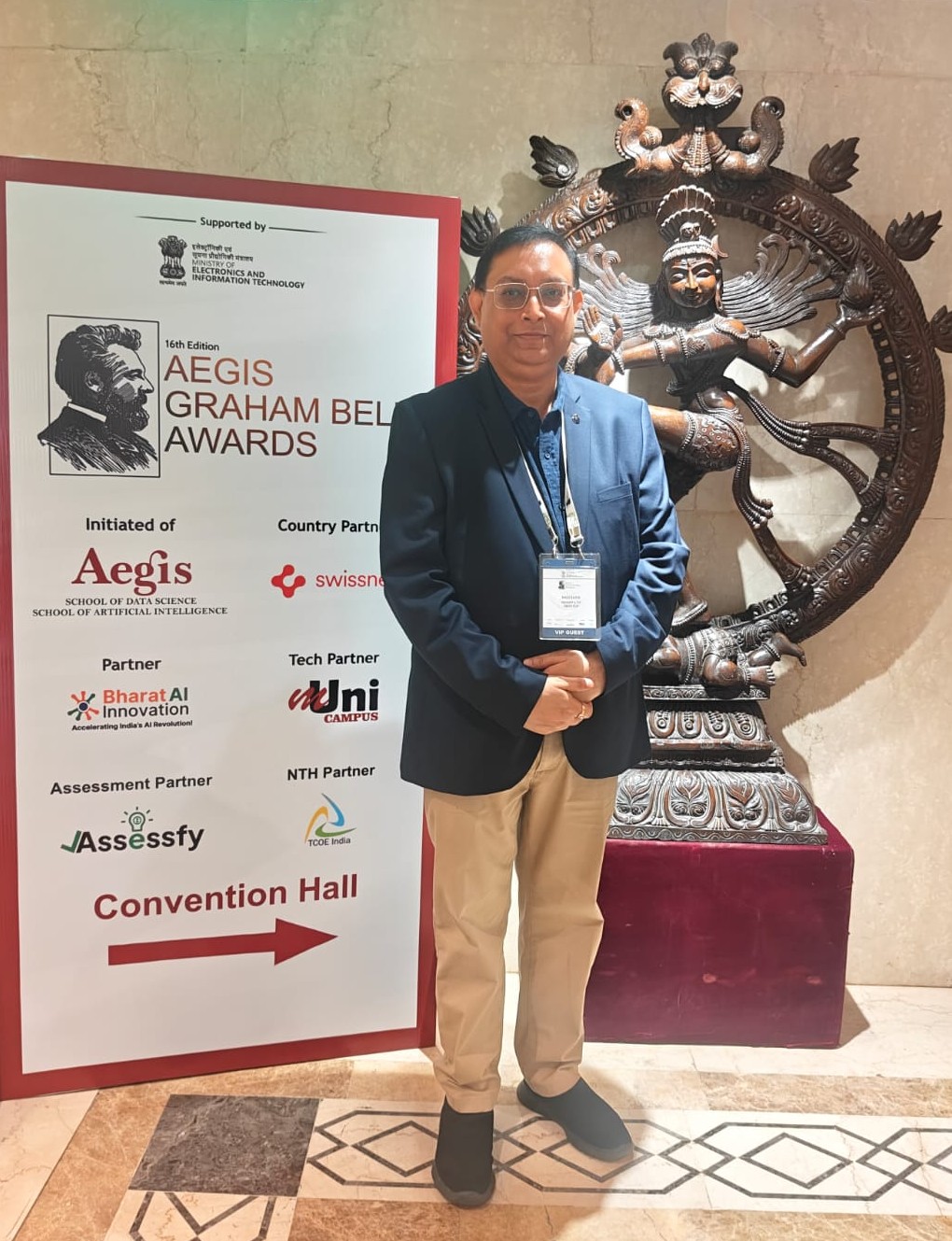
Why AGBA Matters Beyond an Awards Ceremony
Many technology events celebrate innovation. Far fewer demonstrate an ecosystem in motion. AGBA stood out because it brought multiple layers of the AI value chain into one room—government, global services firms, startups, academia, and early-career innovators.
The presence of awardees and finalists from large organisations such as TCS, Cognizant, Capgemini, and Wipro is a strong signal: AI in India is being executed as a transformation lever, not as a lab experiment.
Countries lead in AI not only through models and tools, but through the depth of their ecosystem: enterprise adoption, talent supply, governance, and measurable outcomes.
Enterprise AI: From Experimentation to Institutionalisation
In boardrooms, the conversation has shifted. The question is no longer “Should we use AI?” It is increasingly “How do we redesign operating models around AI?”
What scaled AI execution typically requires
- Data readiness: reliable data pipelines, quality, security, and observability
- Governance: risk controls, privacy, compliance, and model oversight
- Process redesign: re-architecting workflows rather than “automation overlays”
- Workforce transformation: role redesign, training, and change management
- Value measurement: clear KPIs—cost, CX, productivity, risk, and revenue impact
What was visible at AGBA is that enterprises are now competing on these capabilities—turning AI into an institutional muscle rather than a one-off initiative.
Talent Pipeline as National Infrastructure
The National Talent Hunt dimension of the evening is strategically important because it treats skills as infrastructure. Fully funded postgraduate learning in AI, data science, and business analytics, combined with a mandate to work on AI solutions for social good, creates a pipeline that is aligned to national priorities.
India’s long-term AI advantage will depend less on isolated breakthroughs and more on the sustained depth of such talent ecosystems—especially when aligned with real-world implementation needs.
AI for Social Good: From Narrative to Delivery
“AI for good” has often been discussed as intent. The stronger direction is execution. India’s scale demands AI outcomes across healthcare access, citizen services, financial inclusion, education at scale, and public infrastructure.
The important point is not that social-good projects exist, but that they are being embedded into structured learning and innovation pipelines—making impact measurable and repeatable.
The Bigger Signal: India’s AI Ecosystem Is Converging
The most meaningful observation from AGBA 2026 was the convergence of four forces that typically operate in silos:
- Policy leadership that provides strategic direction and legitimacy
- Large enterprises that convert innovation into scaled deployments
- Startups & deep-tech innovators that accelerate experimentation and speed
- Academia & young talent that sustain the long-term supply of skills and research
This convergence is how innovation becomes a durable national advantage.


No comments:
Post a Comment