Wednesday, March 11, 2026

When Industry Leaders Engage with Ideas: Ajit Issac Signing ChatGPT – Transforming Industries through Generative AI

Ajit Issac Signing ChatGPT – Transforming Industries through Generative AI | Rinoo Rajesh

Blog • Generative AI • Enterprise Transformation

When Industry Leaders Engage with Ideas: Ajit Issac Signing ChatGPT – Transforming Industries through Generative AI

Author: Rinoo Rajesh Reading time: ~4–5 mins
Ajit Issac signing the book ChatGPT – Transforming Industries through Generative AI by Rinoo Rajesh.
A special moment as Mr. Ajit Issac signs ChatGPT – Transforming Industries through Generative AI.
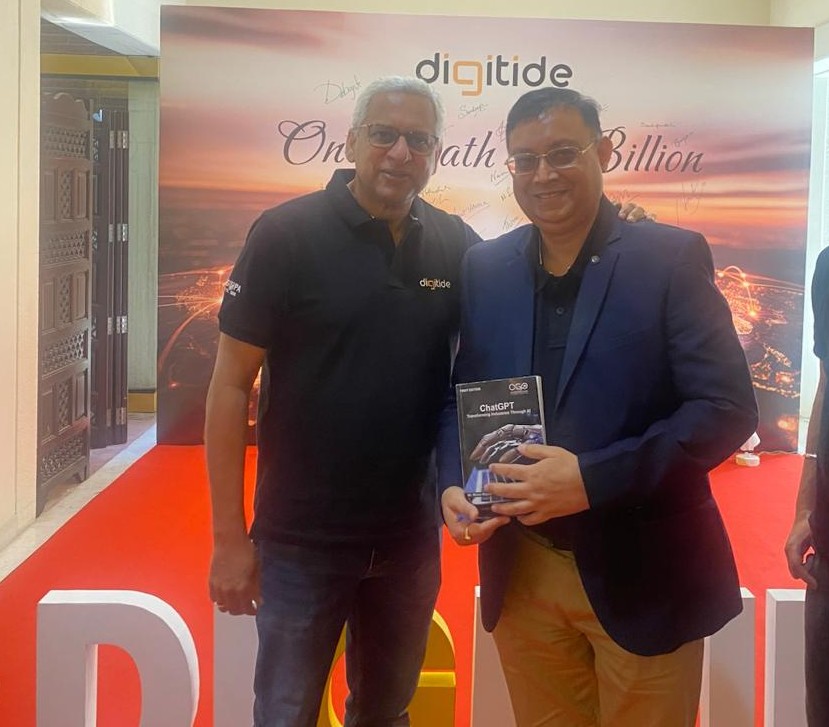
Ajit Issac and Rinoo Rajesh posing with the signed copy of ChatGPT – Transforming Industries through Generative AI.
A meaningful interaction at Digitide, reflecting the growing relevance of Generative AI in enterprise leadership.

Certain professional moments carry significance not because they are ceremonial, but because they represent the intersection of ideas, leadership, and industry transformation.

One such memorable moment for me was when Mr. Ajit Issac, Founder & Chairman of the Quess Group and Digitide, graciously signed my book ChatGPT – Transforming Industries through Generative AI.

This interaction took place during a Digitide gathering and symbolized something far deeper than a simple autograph. It represented the growing recognition that Generative AI is no longer just a technology trend — it is a strategic enterprise conversation.

When Technology Thought Leadership Meets Industry Leadership

Over the last few years, Generative AI has moved rapidly from research labs into the core operating models of global enterprises.

Leaders across industries are now exploring:

  • How AI can enhance productivity
  • How Generative AI can transform customer experience
  • How organizations can responsibly scale AI adoption
  • How leadership teams should prepare for AI-driven operating models

Having a visionary industry leader like Ajit Issac engage with the ideas presented in the book was a meaningful moment in that broader journey.

The transformation driven by AI will not be shaped by technology alone — it will be shaped by leaders who understand its implications for business, people, and society.

The Relevance of Generative AI in Enterprise Transformation

The book ChatGPT – Transforming Industries through Generative AI was written with a simple objective — to help leaders understand how Generative AI can reshape industries.

Across sectors such as:

  • Business Process Management
  • Banking and Financial Services
  • Customer Experience and Contact Centers
  • Marketing and Digital Engagement
  • Knowledge Work and Enterprise Productivity

Generative AI is fundamentally altering how work gets done. Organizations that understand this shift early are able to move from automation to augmentation — and eventually toward autonomous systems.

Ajit Issac’s Leadership and the AI Transformation Narrative

As the founder of Quess Corp, one of India’s largest business services companies, and the driving force behind Digitide, Ajit Issac has consistently demonstrated a forward-looking approach to enterprise growth and innovation.

Digitide itself represents a strategic evolution toward AI-enabled digital services and platforms, helping enterprises harness emerging technologies to drive efficiency and transformation.

In that context, this interaction around a book focused on Generative AI’s impact on industries carried symbolic importance. It highlighted the alignment between thought leadership and enterprise leadership in shaping the future.

From Generative AI to the Next Wave of Transformation

When the book was written, Generative AI had just begun entering mainstream discussions. Since then, the pace of change has only accelerated.

Organizations are now exploring:

  • AI copilots for knowledge workers
  • Autonomous decision-support systems
  • AI-powered customer engagement platforms
  • Intelligent automation across enterprise processes

This journey from Generative AI → Agentic AI → Autonomous enterprises is rapidly becoming the defining narrative of the next decade.

Why Moments Like These Matter

A book becomes meaningful not when it is published, but when it becomes part of real industry conversations. Interactions like these serve as reminders that ideas gain momentum when they connect with leaders who are shaping organizations and industries.

For me personally, this moment was not simply about an autograph — it was about seeing the conversation around Generative AI move from theory into enterprise dialogue.

Looking Ahead

The future of enterprise transformation will be shaped by organizations that can successfully integrate:

  • AI capabilities
  • Human expertise
  • Responsible governance
  • Scalable digital platforms

Books, conversations, and leadership engagement all play a role in accelerating this transition. And moments like this remind us that the journey of ideas truly begins when they reach the hands of leaders who can act on them.


© Rinoo Rajesh. All rights reserved.  •  Website  •  Blog  •  LinkedIn

Sunday, March 08, 2026

AI and Digital Transformation: A Step-by-Step Guide for BPOs

AI and Digital Transformation: A Step-by-Step Guide for BPOs

By Rinoo Rajesh

The BPO industry has entered a new phase. Cost efficiency still matters, of course, but it is no longer the full story. Today, the more relevant question is this: can a BPO become faster, smarter, more predictive, and more valuable to clients at the same time?

Recent research suggests the answer is yes—but only when AI is embedded into the operating model, not treated as a shiny side project. McKinsey notes that contact centers are being reshaped by AI-led redesign, while Deloitte reports that enterprise AI adoption is moving from experimentation toward scaled deployment in 2025 and 2026.

From my perspective, BPO leaders should think of digital transformation less like “installing software” and more like rebuilding an aircraft while keeping it in the air. You cannot pause service delivery. You need to modernize while staying compliant, productive, and client-ready. That is why a step-by-step approach works best.

Step 1: Start with Business Outcomes, Not Tools

Do not begin with “We need GenAI” or “Let’s deploy agents.” Begin with measurable outcomes: reduce average handling time, improve first-contact resolution, lower collections leakage, raise QA consistency, or accelerate onboarding.

McKinsey has observed that digitally integrated outsourcing arrangements can create significantly greater impact than traditional models, especially when transformation is tied to business value rather than labor substitution alone.

Step 2: Prioritize High-Volume, Repeatable Use Cases

The best early wins in BPOs usually come from agent assist, automated call summarization, knowledge retrieval, email drafting, quality monitoring, workflow orchestration, fraud and risk flags, and collections prioritization.

IBM’s recent customer service research highlights how AI is increasingly used to personalize interactions, automate routine support, and uncover new productivity gains in service environments.

A practical example? A customer support BPO can deploy real-time agent assist to surface the next best response, policy prompts, and compliance reminders during live calls. In collections, AI can score accounts, suggest resolution paths, and optimize outreach timing. These are not futuristic ideas anymore; they are fast becoming baseline capabilities.

Step 3: Build a Digital Core Before Chasing Autonomy

This is where many firms stumble. Everyone wants agentic AI, but messy data, fragmented CRMs, weak APIs, and inconsistent SOPs can kill momentum. Accenture’s 2025 work on agentic AI argues that these systems are most effective when connected across enterprise platforms, while PwC’s governance research emphasizes inventory, monitoring, and management of AI use cases as foundational practices.

So yes, ambition is good. But before autonomous workflows, fix the plumbing: unified knowledge bases, clean process maps, workflow engines, audit logs, and secure data access.

Step 4: Redesign the Workforce, Don’t Just Automate Tasks

The leading BPO of 2026 will not be “human-only” or “AI-only.” It will be a human-plus-digital-labor model. Microsoft’s 2025 Work Trend Index points to the emergence of firms that combine human teams with AI agents, and Deloitte has forecast that enterprise use of AI agents will continue to rise sharply through 2027.

What does that mean on the ground? Agents become exception handlers, empathy anchors, and judgment-led problem solvers. Supervisors become performance coaches supported by AI insights. QA teams shift from random sampling to continuous intelligence. Frankly, this is a better job design than forcing people to do robotic work all day.

Step 5: Put Governance at the Center

This part is not glamorous, but it is non-negotiable. AI in BPOs touches customer data, financial records, regulated workflows, and brand reputation. PwC’s India-focused guidance stresses that enterprises need lifecycle governance aligned with emerging national AI governance expectations. At the same time, public reporting on Gartner’s 2025 analysis warns that many agentic AI programs may fail because of poor business clarity, inflated expectations, and weak controls.

In plain language: if you cannot explain who owns the model, what data it sees, how it is monitored, and when a human overrides it, you are not ready to scale.

Step 6: Measure Transformation Like a Portfolio

Track value in waves: productivity, quality, compliance, customer experience, revenue uplift, and resilience. Everest Group’s 2025 outlook also points to outcome-based transformation models gaining ground, which is particularly relevant for BPOs seeking to move from effort-based contracts to value-led partnerships.

The future-forward trend is clear: BPOs will evolve into AI-enabled operations partners, not just outsourced service vendors. The winners will combine platform thinking, workflow intelligence, domain depth, and trusted governance. That shift is already underway.

If you are a CXO, transformation leader, or BPO strategist wondering where to begin, begin small—but begin with intent. A focused use case, the right governance, and disciplined scaling can change the trajectory of the enterprise faster than most teams expect.

Connect with Rinoo Rajesh

To discuss how AI, digital transformation, and agentic operating models can reshape BPOs, connect with me through the following channels:


Monday, March 02, 2026

The Real Significance of the Aegis Graham Bell Awards: India’s AI Story Is Now an Ecosystem Play

Aegis Graham Bell Awards 2026: Enterprise AI Maturity & India’s Innovation Ecosystem

Aegis Graham Bell Awards 2026: What It Signals About Enterprise AI in India

Venue: The Ashok, New Delhi • Event: 16th Aegis Graham Bell Awards (AGBA) • Author: Rinoo Rajesh

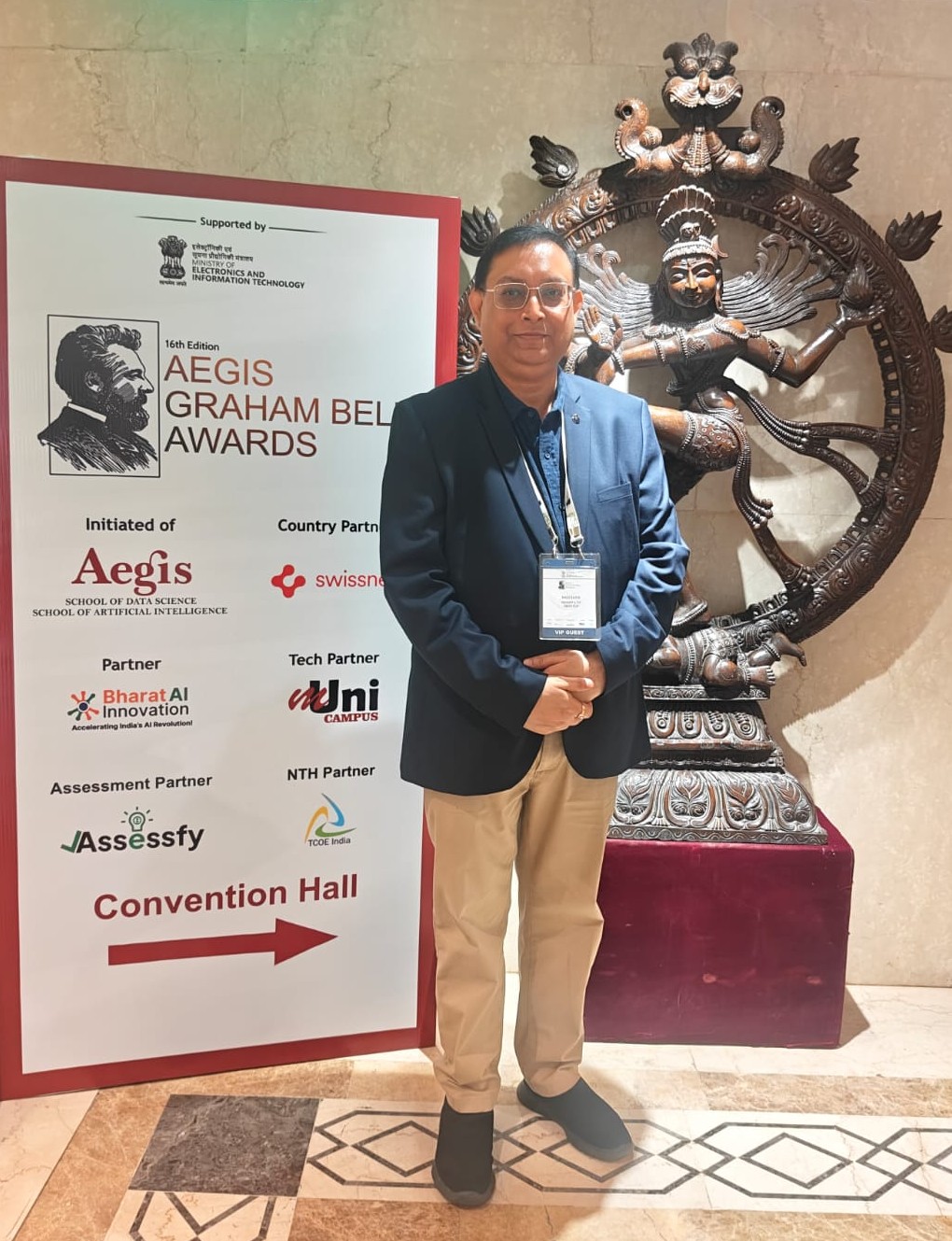
The 16th Aegis Graham Bell Awards at The Ashok, New Delhi, was not merely a talent-focused awards night. It was a clear snapshot of India’s AI maturity—where enterprise-scale execution, policy alignment, academia, and next-generation talent are converging into a single innovation ecosystem. I attended the event as one of the VIP Guests.

Keywords: Aegis Graham Bell Awards 2026, AGBA 2026, Enterprise AI India, AI innovation awards India, The Ashok New Delhi, AI talent pipeline, AI for social good

Executive takeaway: India’s AI story is moving from “pilots and proofs” to “platforms and scaled outcomes”—driven by large enterprises, supported by policy and academia, and strengthened by a deliberate talent pipeline.

Why AGBA Matters Beyond an Awards Ceremony

Many technology events celebrate innovation. Far fewer demonstrate an ecosystem in motion. AGBA stood out because it brought multiple layers of the AI value chain into one room—government, global services firms, startups, academia, and early-career innovators.

The presence of awardees and finalists from large organisations such as TCS, Cognizant, Capgemini, and Wipro is a strong signal: AI in India is being executed as a transformation lever, not as a lab experiment.

Countries lead in AI not only through models and tools, but through the depth of their ecosystem: enterprise adoption, talent supply, governance, and measurable outcomes.

Enterprise AI: From Experimentation to Institutionalisation

In boardrooms, the conversation has shifted. The question is no longer “Should we use AI?” It is increasingly “How do we redesign operating models around AI?”

What scaled AI execution typically requires

  • Data readiness: reliable data pipelines, quality, security, and observability
  • Governance: risk controls, privacy, compliance, and model oversight
  • Process redesign: re-architecting workflows rather than “automation overlays”
  • Workforce transformation: role redesign, training, and change management
  • Value measurement: clear KPIs—cost, CX, productivity, risk, and revenue impact

What was visible at AGBA is that enterprises are now competing on these capabilities—turning AI into an institutional muscle rather than a one-off initiative.

Talent Pipeline as National Infrastructure

The National Talent Hunt dimension of the evening is strategically important because it treats skills as infrastructure. Fully funded postgraduate learning in AI, data science, and business analytics, combined with a mandate to work on AI solutions for social good, creates a pipeline that is aligned to national priorities.

India’s long-term AI advantage will depend less on isolated breakthroughs and more on the sustained depth of such talent ecosystems—especially when aligned with real-world implementation needs.

AI for Social Good: From Narrative to Delivery

“AI for good” has often been discussed as intent. The stronger direction is execution. India’s scale demands AI outcomes across healthcare access, citizen services, financial inclusion, education at scale, and public infrastructure.

The important point is not that social-good projects exist, but that they are being embedded into structured learning and innovation pipelines—making impact measurable and repeatable.

The Bigger Signal: India’s AI Ecosystem Is Converging

The most meaningful observation from AGBA 2026 was the convergence of four forces that typically operate in silos:

  • Policy leadership that provides strategic direction and legitimacy
  • Large enterprises that convert innovation into scaled deployments
  • Startups & deep-tech innovators that accelerate experimentation and speed
  • Academia & young talent that sustain the long-term supply of skills and research

This convergence is how innovation becomes a durable national advantage.

Practical lens for leaders If you are building enterprise AI programs, focus on operating-model maturity: governance, data foundations, role redesign, and value measurement. That is where “AI adoption” turns into “AI advantage.”

About the author: Rinoo Rajesh works on AI-led digital transformation and enterprise operating models across large-scale programs. This post reflects a practitioner’s perspective on what AGBA 2026 signals for India’s AI decade.