Sunday, February 22, 2026

Industry–Academia Collaboration in the Age of AI: Honoured at Confab 360°

Industry–Academia Collaboration in the Age of AI: Honoured at Confab 360° Global Conference
By Rinoo Rajesh • 6–8 min read
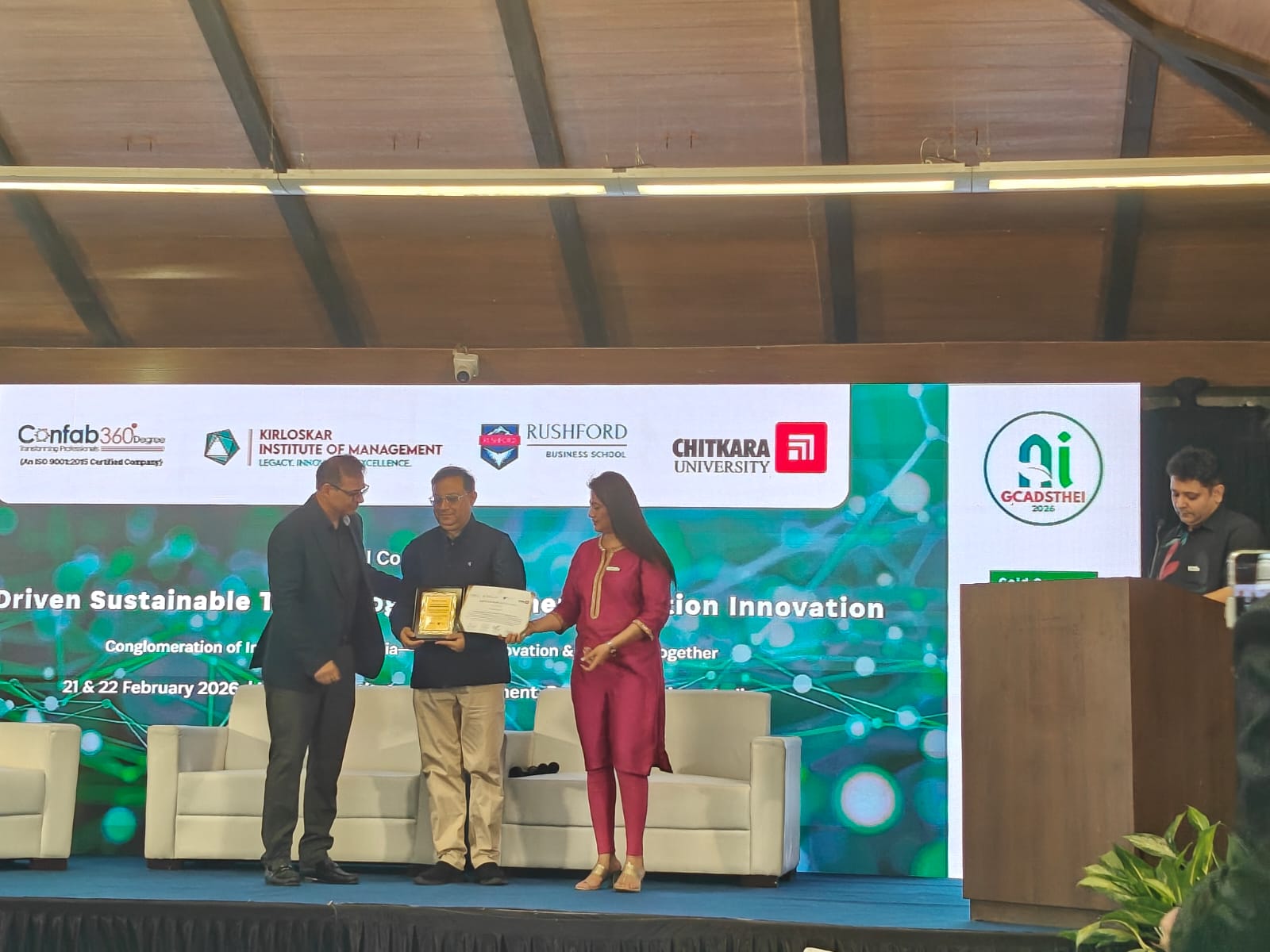
Rinoo Rajesh receiving Industry–Academia Integrator Award for AI & Education Synergy at Confab 360 Global Conference
Receiving the Industry–Academia Integrator Award for AI & Education Synergy at the Confab 360° Global Conference.

Today, I had the honour of being recognised at the Confab 360° Global Conference with the Industry–Academia Integrator Award for AI & Education Synergy. I am grateful for this acknowledgement— not because awards are the destination, but because they represent a growing, shared conviction: the future of talent and innovation will be shaped by how effectively industry and academia work together.

Confab 360° is building exactly that kind of bridge—bringing together thought leaders, educators, innovators, and practitioners to create meaningful dialogue on business, technology, leadership, and impact. Events like these are not mere gatherings; they are catalysts for collaboration, knowledge exchange, and collective growth.

In the age of AI, the most valuable advantage is not technology alone—
it is the ecosystem that converts technology into skills, skills into outcomes, and outcomes into societal progress.

If you’d like context on my larger perspective on this theme, you can also read: Bridging Industry and Academia in the Age of AI .

Why Industry–Academia Collaboration Matters More Than Ever

AI is compressing time. Roles are evolving faster than traditional curriculum cycles, and organisations are under pressure to modernise capability—without compromising quality, compliance, or ethics. In this environment, industry–academia collaboration becomes a strategic necessity—not a goodwill initiative.

1) Building AI-Ready, Future-Ready Talent

The employability gap is rarely about intelligence or intent. It is often about exposure: real problem statements, modern tooling, cross-functional thinking, and professional communication. When academia and industry co-design learning journeys, students graduate with:

  • Role clarity: what the job actually looks like in real settings
  • Skill relevance: the right balance of fundamentals + applied capability
  • Portfolio credibility: projects that are measurable and verifiable
  • Professional maturity: communication, stakeholder thinking, and ownership

2) Translating Research Into Real-World Outcomes

Research becomes powerful when it solves a lived problem—whether in banking, healthcare, manufacturing, education, or public services. With AI, applied research can move from theory to prototype to deployment faster than ever—if we align: problem owners (industry), research capability (academia), and delivery discipline (execution teams).

3) Creating Responsible AI Through Governance and Practice

Responsible AI is not a slide—it is an operating model. When academia and industry collaborate, we can embed best practices around: privacy, security, bias checks, human-in-the-loop review, auditability, and change management—so AI adoption becomes sustainable.

What “AI & Education Synergy” Looks Like in Practice

“Synergy” can sound abstract, so here are practical ways this shows up when done well:

  • Curriculum modernization with industry review boards and fast refresh cycles
  • Live projects with real constraints: timelines, compliance, stakeholder feedback
  • Faculty enablement via industry immersion and co-teaching models
  • Innovation labs where prototypes are tested with real users and data boundaries
  • Mentorship networks that build both technical and leadership capability
  • Career readiness programs that focus on role-based outcomes, not generic training

Reflections From Confab 360°: Ecosystems Create Momentum

One of the most inspiring aspects of Confab 360° is the intent to build a platform that brings diverse stakeholders together— educators, researchers, industry leaders, and policy influencers—to build momentum around innovation and higher education. The energy and clarity of purpose across the community reinforced a simple insight:

Collaboration works when it is designed—with outcomes, cadence, roles, and accountability.

Acknowledgements and Gratitude

I extend heartfelt thanks to Confab 360° and the institutions and leaders who made this conference meaningful. I am grateful for the recognition and, more importantly, for the opportunity to keep contributing to a cause that matters.

If you are a university, institute, corporate, or industry body looking to strengthen your industry–academia bridge (AI readiness, applied projects, innovation labs, curriculum review, mentorship ecosystems), I’m open to structured collaboration conversations.

You can reach me via my blog or connect on LinkedIn (https://www.linkedin.com/in/rinoorajesh) or (https://www.rinoorajesh.com)

Thursday, February 19, 2026

Book Unveiling of Beyond GenAI with Pushkraj Group Chairman | Rinoo Rajesh

Blog • AI Thought Leadership • Enterprise Transformation

When Ideas Meet Industry: A Defining Moment for Beyond GenAI

Author: Rinoo Rajesh Published: 26 Jan 2026 Reading time: ~4–5 mins
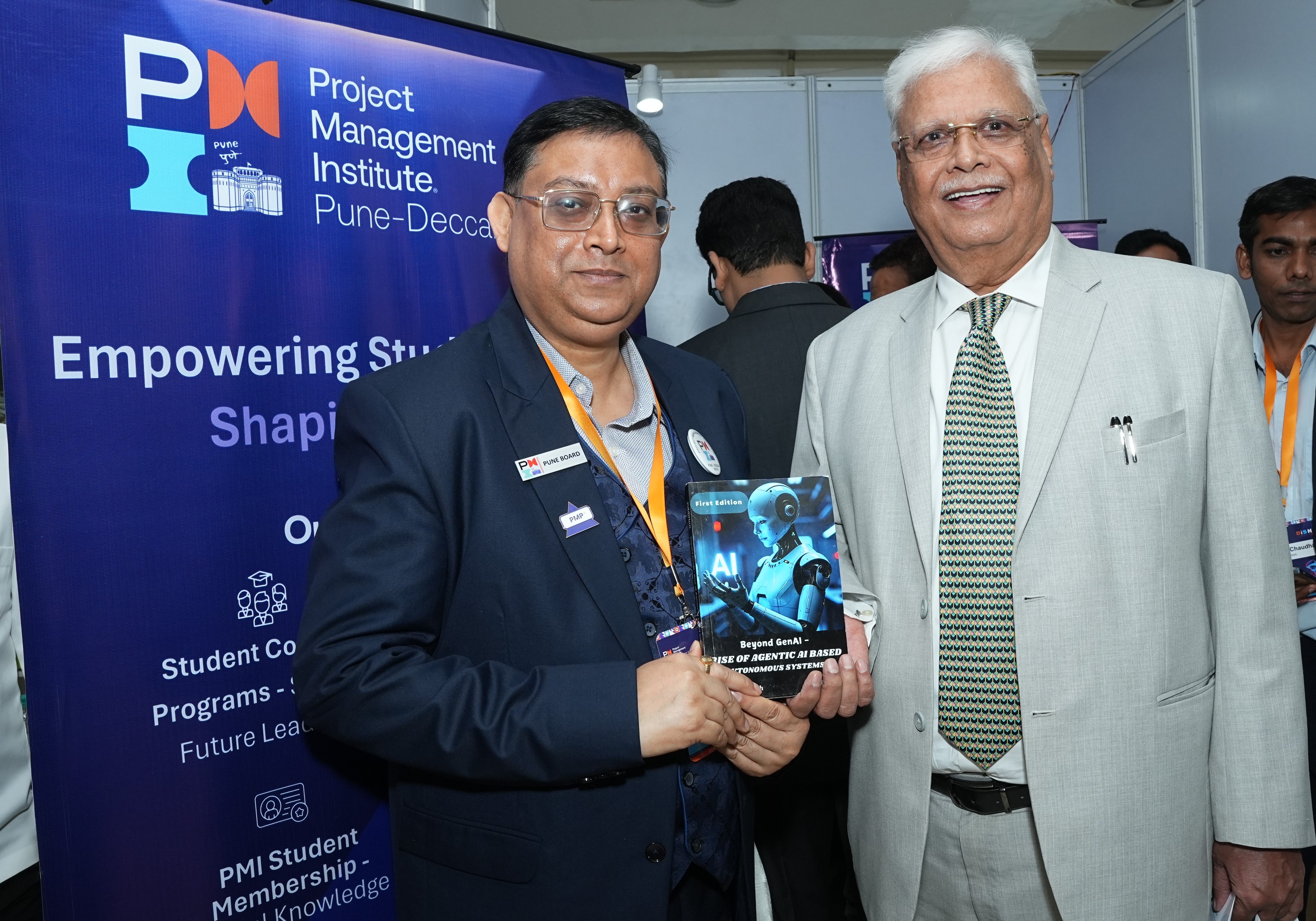
Rinoo Rajesh presenting the book Beyond GenAI to Pushkraj Group Chairman Mr. Shailendra Goswami.
A special moment: presenting Beyond GenAI – Rise of Agentic AI-Based Autonomous Systems to Mr. Shailendra Goswami, Chairman of the Pushkraj Group.

Some moments are not about a formal launch, a stage, or a spotlight. They are about the right conversation, the right context, and the right leadership presence.

One such special moment in my journey as an author and AI practitioner was the informal unveiling of my book, Beyond GenAI – Rise of Agentic AI-Based Autonomous Systems, in the presence of Mr. Shailendra Goswami, Chairman of the Pushkraj Group.

Set against the vibrant backdrop of the PMI Pune-Deccan India Chapter ecosystem, this interaction symbolized something far more meaningful than a ceremonial photograph—it reflected the growing mainstream enterprise interest in the future of AI.

From Writing About the Future to Placing It in the Hands of Industry

Books on emerging technologies often begin as research, observations, and frameworks. But their real purpose is fulfilled only when they reach:

  • Decision-makers
  • Industry leaders
  • Institution builders
  • Practitioners driving transformation

Handing over the book to Mr. Goswami was significant because it represented the movement of AI from concept to boardroom conversation.

Agentic AI and autonomous systems are no longer experimental themes. They are rapidly becoming central to enterprise operating models, business transformation strategies, customer experience redesign, and digital workforce evolution. This transition requires leadership understanding—not just technical adoption.

Why This Moment Matters in the Larger AI Journey

India is entering a decade where it will not just consume technology but shape global digital narratives. We are witnessing:

  • AI becoming a boardroom agenda
  • Enterprises moving from automation to autonomy
  • Leaders seeking structured, responsible adoption frameworks

In this context, every meaningful interaction between technology thought leadership and business leadership becomes important—because transformation does not happen through technology alone; it happens through shared understanding.

The Role of Ecosystems in Shaping the Future

While the book itself focuses on Agentic AI and autonomous enterprise systems, this moment also highlighted the importance of professional ecosystems like PMI Pune-Deccan in enabling cross-domain dialogue, bringing industry leaders and knowledge creators together, and creating platforms for future-focused conversations—not as a thematic anchor, but as a catalyst for collaboration.

Beyond the Book: The Mission

For me, this was never just about publishing a title. The larger mission has always been to:

  • Demystify AI for business leaders
  • Move the narrative beyond hype
  • Enable responsible, scalable adoption
  • Connect technology with real enterprise value
The real success of a book is not in its release—it is in the quality of conversations it triggers.

A Moment of Gratitude

I am deeply grateful to Mr. Shailendra Goswami for his encouragement and gracious presence, and to the broader leadership and professional community that continues to engage with these ideas. These moments reinforce a powerful belief:

The future will not be built by technology alone—it will be built by leaders who are willing to understand it, question it, and shape it.

The Road Ahead

As AI moves from tools to autonomous, decision-capable systems, the need for governance, ethics, scalable operating models, and leadership readiness will only grow. The journey from GenAI → Agentic AI → Autonomous enterprises will be defined by how effectively we bring industry, knowledge, and leadership together.

This interaction was one such step in that direction. Many more conversations lie ahead.

© Rinoo Rajesh. All rights reserved.  •  About  •  Books  •  Contact

Sunday, February 15, 2026

Beyond the Plaque: Reimagining Chapter Leadership in a Tech-Driven, Global PMI Ecosystem

During my recent visit to Dubai for the PMI Presidents’ Meet, I was honoured to receive a thoughtfully crafted plaque. While such recognitions are always humbling, the true value of this moment lay not in the plaque itself—but in what it symbolised.


It represented a shared global commitment to future-focused, tech-driven leadership, strong corporate and ecosystem alignment, and the pursuit of transformative regional impact through the Project Management Institute (PMI).

Recognition as a Reflection of Collective Intent

In today’s interconnected world, leadership recognition is rarely about an individual. It is a reflection of collective intent, shared values, and aligned direction. The PMI Presidents’ Meet brought together chapter leaders from across geographies—each operating in different cultural, economic, and maturity contexts—yet united by a common belief:

Project management leadership must evolve to stay relevant in a rapidly changing world.

Conversations in Dubai went far beyond operational metrics or compliance discussions. They touched upon technology adoption, AI-enabled project delivery, industry-academia collaboration, and the role of chapters in shaping future-ready professionals.

Why Chapters Must Go Beyond Events and PDUs

As President of the PMI Pune-Deccan India Chapter, this recognition reinforced a conviction I’ve held strongly for some time:
chapters today must transcend their traditional roles.

While events, certifications, and PDUs remain foundational, they are no longer sufficient on their own. High-impact chapters must increasingly function as:

  • Ecosystem builders connecting industry, academia, startups, and professionals
  • Thought leadership platforms shaping conversations on emerging technologies, governance, and leadership
  • Regional transformation catalysts addressing real-world challenges through structured initiatives
  • Talent and leadership pipelines for the next generation of project professionals

In essence, chapters must evolve from being event-centric to becoming impact-centric.

The Role of Technology and AI in Chapter Leadership

A recurring theme at the Presidents’ Meet was the growing influence of technology—particularly AI and data-driven decision-making—on project management and professional communities.

For chapters, this opens powerful possibilities:

  • Smarter member engagement through digital platforms
  • AI-assisted learning journeys and mentoring
  • Data-driven governance and volunteer management
  • Stronger outreach to enterprises and institutions

Technology is no longer an enabler at the margins—it is central to how chapters scale impact without diluting values.

Global Conversations, Local Impact

One of the most energising aspects of the Dubai meet was the quality of peer conversations—candid, forward-looking, and deeply collaborative. Learning from fellow chapter presidents reinforced an important insight:

Global alignment does not mean uniformity; it means shared purpose with local relevance.

Each chapter must design solutions rooted in its regional realities while staying aligned with PMI’s global mission. For Pune-Deccan, that translates into deeper industry partnerships, stronger academic interfaces, and sustained thought leadership in areas such as digital transformation, AI, and large-scale program delivery.

Gratitude—and the Road Ahead

I am deeply grateful to the global PMI leadership and my fellow chapter presidents for the camaraderie, openness, and mutual respect that defined this engagement. Moments like these remind us that leadership is not a destination—it is a continuous journey of learning, alignment, and service.

The road ahead is both challenging and exciting. As project management professionals, chapter leaders, and ecosystem partners, we are just getting started.

Monday, February 09, 2026

Bridging Industry and Academia in the Age of AI: From Dialogue to Durable Impact

As Artificial Intelligence, sustainability imperatives, and emerging technologies reshape how we work, learn, and innovate, one reality is becoming increasingly evident: industry and academia can no longer afford to operate in silos.


I will be joining the Global Conference on AI-Driven Sustainable Technologies & Higher Education Innovation as a panel speaker, and the conversations planned at this forum resonate deeply with the work I have been engaged in—both in practice and through my writing on Artificial Intelligence.

Over the last few years, one recurring pattern has stood out clearly:
the challenge is not a lack of intent to collaborate, but a failure of translation.

The Real Gap Is Not Intent — It Is Translation

Academia produces deep research, rigorous frameworks, and long-term thinking. Industry, on the other hand, grapples with immediacy—scale, timelines, governance, cost, and real-world constraints.

The disconnect arises when:

  • research struggles to find a path to application, and
  • industry problems fail to meaningfully shape academic inquiry.

Bridging this gap is not about more MoUs or ceremonial partnerships. It requires mechanisms that translate knowledge into capability and ideas into systems.

In my books on AI, I have repeatedly emphasized this point:
AI delivers value only when embedded into operating models, decision systems, and institutional workflows—not when treated as a standalone innovation experiment.

The same principle applies to industry–academia collaboration.

AI and Sustainability Demand a New Collaboration Model

AI and sustainability are fundamentally different from earlier waves of technology adoption.

They are:

This makes superficial engagement ineffective.

Meaningful collaboration must therefore focus on:

  • co-created curricula aligned with evolving industry realities,
  • research grounded in live, complex industry problems,
  • joint proof-of-concepts and innovation labs,
  • faculty immersion in industry environments, and
  • early exposure of students to systems thinking, ethics, and execution constraints.

When these elements are missing, AI education risks becoming tool-centric rather than outcome-centric—and sustainability becomes rhetoric rather than practice.

From Individual Excellence to Institutional Capability

One recurring theme I explore in my writing is the distinction between individual excellence and institutional capability.

Universities and organizations alike often celebrate isolated successes:

  • a brilliant research paper,
  • a successful pilot,
  • a one-off industry project.

But true impact emerges only when success becomes repeatable by design.

In the context of higher education, this means:

  • governance models that support continuous curriculum evolution,
  • assessment systems aligned with real-world outcomes,
  • research incentives linked to applicability and collaboration, and
  • institutional structures that survive leadership transitions.

AI, when used thoughtfully, can accelerate this shift—but only if it is treated as a capability enabler, not a technological shortcut.

Why Industry–Academia Collaboration Is Now Foundational

The future of higher education will not be defined by rankings alone, nor by isolated centers of excellence.

It will be defined by:

  • relevance to industry and society,
  • adaptability to technological change,
  • ethical and sustainable innovation practices, and
  • the ability to prepare graduates for complexity—not certainty.

Industry–academia collaboration is no longer optional or episodic.
It is foundational to national competitiveness, workforce readiness, and sustainable growth.

What gives me confidence about forums like this global conference is the explicit intent to move beyond discussion—towards PoCs, joint programs, global research collaboration, and execution-oriented outcomes.

That is where ideas begin to matter. AI will continue to evolve. Sustainability challenges will intensify.
What will truly differentiate institutions and ecosystems is their ability to translate insight into impact—consistently, ethically, and at scale.

The future belongs not to those who experiment the most, but to those who build systems that make excellence inevitable.

I look forward to contributing to this dialogue, learning from global peers, and collectively shaping collaboration models that endure well beyond conferences and panels.

Tuesday, February 03, 2026

DISHA 2026: A Leadership Reflection on Purpose, People, and Professionalism

In a world overflowing with conferences, summits, and conclaves, true success is rarely defined by numbers alone.

Yes, registrations matter.
Yes, speaker line-ups matter.
Yes, sponsors and scale matter.


But what truly differentiates an impactful conference from a forgettable one is intent—and how well that intent is translated into execution.

DISHA 2026 was one such moment of intent made visible.

As Conference Chair for DISHA 2026 and President of the PMI Pune-Deccan India Chapter, this blog is a personal reflection on why DISHA worked, who made it work, and what it reinforces about leadership and community building.

Beyond an Event: Designing for Purpose

DISHA 2026 was never meant to be “just another annual conference.”

From the outset, the objective was clear:

  • Keep the practitioner at the center, not the podium
  • Encourage dialogue, not monologues
  • Create a platform where industry leaders, project professionals, and emerging talent could engage meaningfully

The depth of conversations, the energy in the rooms, and the quality of engagement reaffirmed a simple truth: professionals today value relevance, applicability, and authenticity over theatrics.

Volunteers: The Quiet Architects of Impact

Every successful professional community rests on an invisible force—volunteers.

DISHA 2026 was built on the shoulders of volunteers who planned, coordinated, executed, corrected, and delivered—often behind the scenes and without expectation of recognition.

Long hours.
High accountability.
Last-mile execution under pressure.

This is leadership without titles.
This is ownership without authority.
This is service leadership in action.

The true success of DISHA 2026 belongs to volunteers who chose commitment over convenience and excellence over ease.

Governance That Empowers, Not Restricts

Strong outcomes require strong governance—but not control.

The PMI Pune Board demonstrated what modern, impact-driven governance looks like:

  • Clear direction without micromanagement
  • Timely decisions with shared accountability
  • Trust in teams, backed by engagement and support

This balance allowed organizing teams and volunteers to perform at their best. It is a reminder that governance is not about authority—it is about enablement.

A Community That Shows Up

To the speakers, partners, sponsors, and delegates—thank you.

Your participation validated PMI Pune’s role as a trusted platform for learning, collaboration, and professional growth. When professionals come together with curiosity, openness, and respect, communities strengthen organically.

Events may initiate engagement—but communities sustain impact.

Looking Ahead: What DISHA 2026 Reinforces

DISHA 2026 was not an endpoint. It was a reinforcement.

A reinforcement that:

  • Practitioner-first value matters
  • Volunteer leadership scales impact
  • Ethical, transparent governance builds trust
  • Long-term community building outweighs short-term wins

When purpose is shared and leadership is distributed, outcomes follow naturally.

This is the spirit we will continue to nurture at PMI Pune.

Onward—together.

Sunday, February 01, 2026

Part 6: Preparing for the Autonomous AI Era — A Leader’s Playbook

Agentic AI is not a distant future.


It is a strategic inevitability.

The real question for leaders is not if—but how prepared.


What Will Change Fundamentally

1. Decision Velocity

Enterprises will move from:

·       Periodic decisions → Continuous decisions

Organizations that can’t keep up will lose relevance—not efficiency.


2. Workforce Roles

Humans will increasingly:

·       Set objectives

·       Define constraints

·       Review outcomes

·       Handle edge cases

Routine execution will belong to machines.

This is not job loss—it is job redefinition.


3. Competitive Advantage

The advantage will shift from:

·       Who has AI

·       To who governs and orchestrates it best

Autonomy without strategy is chaos.
Strategy without autonomy is slow.


What Leaders Must Do Now

1. Move Beyond Pilots

Stop treating AI as an experiment.
Start treating it as core infrastructure.


2. Invest in Architecture, Not Just Models

LLMs alone are not strategy.
Orchestration, governance, and integration are.


3. Redesign Governance for Autonomy

Update policies, escalation paths, and accountability models before autonomy scales.


4. Build AI-Literate Leadership

Boards and executives must understand:

·       What AI can decide

·       What it should never decide

·       Where humans remain essential

This is a leadership skill—not a technical one.


The Bottom Line

Generative AI helped machines create.
Agentic AI enables machines to act.

How responsibly we design that autonomy will define:

·       Enterprise resilience

·       Customer trust

·       Societal impact

 This blog series distills the core ideas from my book, but the full frameworks, architectures, and real-world applications are explored in depth in:

📘 Beyond GenAI – Rise of Agentic AI-Based Autonomous Systems
🔗 https://www.amazon.in/dp/9364229363

If you’re designing, deploying, or governing AI systems today—this is the conversation that matters next.

To Follow this Blog Click here