Showing posts with label Digital Transformation. Show all posts

Tuesday, September 22, 2026

Artificial Intelligence is no longer merely a technology initiative

Reflections from SCIT's 27th National Seminar 2026

Artificial Intelligence is no longer merely a technology initiative. It is a strategic choice, an operating-model challenge and, increasingly, a boardroom responsibility.

That was the central conviction I carried into the panel discussion at the 27th National Seminar 2026, presented by the Quality Improvement Cell of the Symbiosis Centre for Information Technology (SCIT). The theme, “AI Momentum: Fueling Enterprise Reinvention Through Data, Security and AI,” captured an important moment for business and society. AI has moved beyond curiosity. The question is no longer whether organisations will use it, but whether they will use it with purpose, discipline and accountability.

Participating as a panelist gave me an opportunity to engage with fellow leaders, faculty members and students on the choices that now confront enterprises. Which emerging technologies deserve serious investment? Why do promising pilots fail to become enterprise capabilities? How should organisations integrate AI, cloud, analytics and automation without creating more complexity? And as systems become increasingly autonomous, who remains accountable for their decisions and consequences?

Inaugural lamp-lighting ceremony at SCIT's 27th National Seminar 2026 on AI Momentum

The inaugural ceremony of SCIT's 27th National Seminar 2026, centred on enterprise reinvention through data, security and AI.

Momentum is valuable only when it has direction

“AI momentum” is an apt description of the present environment. New models, platforms, copilots and autonomous agents appear at extraordinary speed. Capital is flowing into AI ventures. Boards are asking management teams for AI strategies. Business units are experimenting with automation, knowledge assistants, prediction and decision support. Yet movement must not be mistaken for progress.

An organisation can run dozens of pilots and still remain fundamentally unchanged. It can subscribe to leading AI platforms and still possess fragmented data, unclear ownership and weak adoption. It can demonstrate an impressive proof of concept while lacking the controls needed to deploy it responsibly. The real measure of momentum is therefore not the number of experiments launched. It is the amount of durable business value created.

The biggest constraint on enterprise AI is no longer access to technology. It is the quality of judgement applied to selecting, integrating, governing and scaling it.

That judgement must connect technological possibility with customer value, economics, organisational capacity, risk and long-term strategy. It cannot reside only within the technology function. It must become a shared leadership capability.

AI has become a board agenda

Boards do not need to become model developers or data scientists. They do, however, need sufficient technological literacy to govern consequential decisions. When AI influences credit, hiring, pricing, customer treatment, cybersecurity, healthcare, collections, supply chains or strategic planning, it directly affects enterprise value and stakeholder trust.

From a board and governance perspective, five questions have become essential:

  1. What business outcome are we pursuing? AI must begin with a meaningful problem or opportunity, not with pressure to follow a trend.
  2. Who owns the outcome? Every initiative needs accountable business leadership, not merely technical sponsorship.
  3. What data and operating conditions does it depend upon? A compelling model cannot compensate for unreliable data or a broken process.
  4. What could go wrong, and how would we know? Risk must be designed into the initiative through testing, monitoring, escalation and human oversight.
  5. How will value be measured? Productivity claims must eventually translate into cycle-time reduction, revenue, cost, quality, risk reduction or a better stakeholder experience.

This is why AI governance should not be treated as a late-stage compliance gate. Good governance improves decision quality from the beginning. It clarifies acceptable use, assigns accountability, creates evidence and enables organisations to scale with confidence.

Rinoo Rajesh participating in the expert panel at SCIT's NATSEM 2026

On the expert panel at NATSEM 2026, discussing how enterprises can convert technological possibility into governed, measurable value.

Separating durable opportunity from technological fashion

Leaders often ask how they can distinguish a technology worth investing in from one that is largely fashionable. There is no perfect forecast, but there is a disciplined way to think.

First, begin with the problem. Is it material, recurring and sufficiently important to justify change? Second, identify the advantage. Does the technology create a meaningful improvement over existing methods? Third, test readiness. Are the data, architecture, skills and processes capable of supporting it? Fourth, evaluate risk and reversibility. Can the organisation contain failure, protect stakeholders and change course without disproportionate damage? Finally, assess scalability. Can a successful experiment be integrated into real workflows and adopted by the people who must use it?

This framework shifts the conversation away from excitement and towards evidence. It also reminds us that early adoption is not automatically an advantage. Early adopters create value when they learn faster than competitors, not when they merely buy sooner.

From experimentation to enterprise transformation

Many organisations are now caught in what I call the pilot paradox: they can prove that AI works in a controlled setting, yet struggle to make it work reliably across the enterprise. The gap is rarely caused by the model alone. It is created by fragmented ownership, inaccessible data, legacy integration, unclear process design, inadequate controls and resistance to new ways of working.

Moving beyond experimentation requires a portfolio approach:

  • Prioritise use cases by value and feasibility, not novelty.
  • Assign an accountable business owner with authority over the affected workflow.
  • Create reusable foundations for data access, model evaluation, security, identity, orchestration and monitoring.
  • Redesign work instead of placing AI on top of an unchanged process.
  • Measure adoption and outcomes alongside technical performance.
  • Retire weak initiatives so that capital and attention remain focused on those capable of delivering value.

The strongest AI programmes create a repeatable path from discovery to controlled deployment and then to scale. They balance speed with evidence. They allow teams to experiment, but they also define the standards an initiative must meet before it is allowed to influence important decisions.

Data, security and architecture are not background issues

The seminar theme rightly placed data and security alongside AI. AI cannot be separated from the environment in which it operates. If data is incomplete, biased, poorly governed or disconnected from its business meaning, the system will amplify those weaknesses. If identity, access and monitoring are inadequate, an intelligent interface can become a new route to sensitive information or unintended action.

Organisations therefore need more than a data lake or a policy document. They need clarity about authoritative sources, ownership, lineage, quality, access rights, retention and permitted use. Security must extend from infrastructure to prompts, models, tools, integrations and outputs. Architecture must allow AI to work with enterprise systems without creating uncontrolled dependencies or yet another generation of silos.

This becomes particularly important when companies adopt multiple technologies simultaneously. Cloud, AI, analytics, automation, CRM and digital platforms may each be valuable, but value is lost when they are purchased and implemented as disconnected layers. The objective should be a coherent capability architecture in which data flows securely, responsibilities are clear and components can evolve without destabilising the enterprise.

Agentic AI raises the accountability threshold

Generative AI largely changed how people access and create information. Agentic AI goes further: systems can plan, select tools, coordinate actions and complete multi-step workflows with a degree of autonomy. This can unlock significant productivity and new service models, but it also raises the consequences of error.

When an AI system recommends, a human can choose whether to act. When an AI agent acts across applications, communicates with customers, alters records or initiates a transaction, governance must become more explicit. Organisations need defined authority boundaries, role-based access, approval thresholds, logs, monitoring, exception handling and reliable ways for people to intervene.

Autonomy does not transfer accountability from the organisation to the machine. It increases the organisation's obligation to define, observe and control how that autonomy is exercised.

The right design is not “human versus AI.” It is a thoughtful allocation of responsibility between people and machines. AI can process scale, detect patterns, maintain consistency and execute routine actions. Humans must remain responsible for purpose, values, ambiguity, exceptional circumstances and consequences.

Panelists and academic leaders at SCIT's 27th National Seminar 2026

With fellow panelists and academic leaders following a wide-ranging conversation on technology, transformation and responsible leadership.

Different industries, common transformation disciplines

Technology priorities differ significantly by industry. A bank must give particular attention to explainability, fraud, customer protection and regulation. A manufacturer may focus on predictive maintenance, computer vision, supply-chain resilience and quality. A telecom organisation may emphasise network intelligence and service assurance. A customer-experience operation may concentrate on conversational AI, agent assistance and workflow automation.

Yet the disciplines that separate successful transformations from unsuccessful ones are remarkably consistent: a clear business problem, engaged leadership, trusted data, integrated architecture, accountable ownership, adoption by frontline teams and sustained measurement of results.

Technology does not transform an organisation by itself. Transformation occurs when strategy, process, people, data and governance change together. This is why organisations that treat AI as a software installation often underperform those that treat it as a redesign of how work is conceived, decisions are made and value is delivered.

The entrepreneurial opportunity

For entrepreneurs, the present moment offers enormous opportunity—but not simply because AI is fashionable. The strongest ventures will solve specific, high-friction problems and combine domain understanding with intelligent technology. They will build trust into the product, demonstrate measurable economics and integrate with how customers actually work.

There is substantial room for AI-native solutions in financial services, customer operations, healthcare, education, manufacturing, logistics, governance and professional services. There is equal opportunity in the enabling layers: data quality, security, model monitoring, workflow orchestration, evaluation, compliance and human oversight.

The enduring advantage will not come from attaching “AI” to a conventional offering. It will come from reimagining an outcome and designing a better system to deliver it.

A message for students and future technology leaders

One of the most energising aspects of NATSEM 2026 was the presence of students preparing to enter a workplace that will be very different from the one many of us first encountered. Their careers will develop alongside increasingly capable AI systems. That reality should inspire preparation, not fear.

My message to them was to build interdisciplinary strength. Technical knowledge is valuable, but the leaders of the AI era will also need to understand business models, customers, processes, communication, ethics, risk and governance. They must learn to ask good questions, challenge assumptions, interpret evidence and make decisions when the answer is not obvious.

The most defensible human capabilities will include judgement, empathy, creativity, contextual understanding, collaboration and moral responsibility. These should not be viewed as “soft” skills. In an environment of abundant machine intelligence, they become core leadership infrastructure.

Speakers, faculty and students assembled at SCIT's NATSEM 2026

Speakers, faculty members, organisers and students at NATSEM 2026—a reminder that enterprise reinvention is ultimately a human and institutional endeavour.

A practical leadership agenda

For organisations seeking to convert AI momentum into responsible progress, I would suggest six immediate actions:

  1. Establish a shared AI ambition. Define where AI should create value and where it should not be used.
  2. Create a prioritised use-case portfolio. Balance near-term gains with strategic capability building.
  3. Assess enterprise readiness. Examine data, architecture, talent, process maturity, security and change capacity.
  4. Set governance before scale. Define accountability, risk classification, controls, evaluation and escalation.
  5. Redesign workflows around human-AI collaboration. Specify which decisions are automated, assisted, reviewed or reserved for people.
  6. Measure outcomes continuously. Track business value, adoption, model behaviour, risk and stakeholder impact.

This agenda is not about slowing innovation. It is about ensuring that speed produces progress rather than unmanaged exposure. Organisations that build these disciplines now will be better positioned to absorb future advances in AI without having to rebuild their foundations each time the technology changes.

From intelligence to judgement

The discussion at NATSEM 2026 reinforced my belief that the next phase of enterprise AI will not be defined only by more capable models. It will be defined by the ability of institutions to combine machine intelligence with human judgement, strategic clarity and responsible governance.

The future will belong neither to technology alone nor to leadership that remains distant from it. It will belong to leaders who understand enough technology to ask the right questions, enough business to identify real value, and enough governance to remain accountable for the outcomes.

My sincere appreciation to the leadership and organising team at SCIT, my fellow panelists, the faculty members and the students who made the seminar thoughtful, relevant and forward-looking. Conversations such as these matter because the choices we make today will shape not only how enterprises compete, but also how responsibly intelligence is embedded into the systems that influence our lives.


About the author: Rinoo Rajesh is the Founder and Director of Enrich Technology Services, an enterprise AI and digital transformation leader, author, board advisor, angel investor, IICA Certified Independent Director and President of the PMI Pune-Deccan India Chapter. His work focuses on Generative AI, Agentic AI, intelligent automation, enterprise architecture, governance and responsible transformation.

Sunday, July 12, 2026

From GenAI to Agentic AI: Why the Next AI Shift Is About Action, Not Content

From GenAI to Agentic AI: Why the Next AI Shift Is About Action, Not Content

Quick take: Generative AI helped enterprises create faster. Agentic AI will help them act faster — by perceiving context, reasoning through options, planning tasks, executing within workflows, and learning from outcomes. That shift matters because business value increasingly comes not from content alone, but from responsible execution.

From GenAI to Agentic AI - the next AI shift is about action, not just content. Diagram showing AI capabilities: perceive, reason, plan, act and learn.

For the last two years, many boardroom conversations on artificial intelligence have started with a familiar question: what can we generate? Can AI write the proposal, summarize the meeting, create the slide, draft the code, or respond to the customer?

Those were useful questions. They helped organizations move from curiosity to experimentation. But they are no longer sufficient.

The more important question now is this: what can AI responsibly do?

That is the shift I explore in my book, Beyond GenAI - Rise of Agentic AI Based Autonomous Systems. Generative AI changed how we create. Agentic AI will change how we execute. The difference may sound subtle, but in enterprise terms it is fundamental.

GenAI generates. Agentic AI acts within context.

Why Agentic AI Is a Bigger Shift Than It First Appears

Generative AI is largely reactive. We give it a prompt; it produces an output. That output may be a document, summary, image, code block, recommendation, or conversation. It has already created enormous value by reducing effort and accelerating knowledge work.

Agentic AI extends that capability into a more operational model. An agent does not merely answer a question. It can interpret signals, evaluate choices, break work into steps, act through connected tools or systems, and improve through feedback. In practical terms, this is the movement from content generation to governed enterprise action.

A customer service bot that answers a query is useful. An agentic workflow that understands intent, checks policy, creates a ticket, updates the CRM, alerts a supervisor, and schedules the next action is a different class of capability.

A finance assistant that drafts a report is useful. An agent that reconciles exceptions, highlights anomalies, routes approvals, and maintains an auditable trail begins to reshape the operating model.

Why This Matters to CXOs

For CXOs, the promise of Agentic AI is not simply productivity. It is decision latency reduction. Enterprises lose time between noticing a signal and acting on it: a customer complaint, a payment delay, a compliance exception, a demand spike, a quality issue, or a project risk.

Agentic AI can shorten that distance — but only if it is designed with discipline.

This is where many AI conversations become shallow. The temptation is to compare models, tools, or demos. The more strategic discussion is about workflow ownership, process architecture, data access, governance, economics, and accountability.

In simple terms: an AI system that can act must know where it is allowed to act, when it must ask for approval, and how it leaves evidence behind.

Without those controls, autonomy can quickly become operational risk.

The Five Capabilities That Define Agentic AI

In the book, I describe Agentic AI through a simple capability loop: perceive, reason, plan, act, and learn. This framework keeps the conversation practical.

  • Perceive: understand signals from documents, CRM records, tickets, conversations, dashboards, sensor feeds, or external data.
  • Reason: interpret what those signals mean and evaluate possible responses.
  • Plan: break a broader objective into smaller, executable steps.
  • Act: work through tools, APIs, workflows, and enterprise systems.
  • Learn: improve through outcomes, feedback, and reflection.

When these five capabilities come together, AI stops being only a creative assistant and starts becoming part of the enterprise execution fabric.

Where the Earliest Value Is Emerging

The earliest enterprise value will not always come from the most glamorous use cases. It will come from areas where repetitive decisions, fragmented systems, and human follow-ups create persistent friction.

High-potential enterprise use cases

  • Contact centers: summarize calls, detect sentiment, retrieve knowledge, propose resolutions, update CRM fields, and trigger backend actions.
  • Back-office operations: support invoice matching, vendor onboarding, reconciliation, documentation, and exception handling.
  • Lending and collections: prioritize outreach, draft compliant communication, track commitments, and escalate risk signals.
  • GCCs and shared services: strengthen process intelligence, platform engineering, and enterprise-grade automation.

The common pattern is clear: Agentic AI is strongest when it is attached to a real workflow, not when it is left as an isolated chatbot.

Governance Cannot Be an Afterthought

The same capability that makes Agentic AI powerful also makes it sensitive. If AI is only generating text, the risk is usually reviewable before action. If AI is acting inside workflows, governance must be designed before deployment.

Every enterprise agent needs boundaries: access rights, approval limits, escalation rules, audit logs, exception pathways, rollback mechanisms, and human override.

In simple language, we should not give an AI agent unlimited authority just because the demo looks impressive.

Responsible Agentic AI requires a new operating discipline. The question is not only, Can the agent complete the task? It is also, Can we explain what it did, why it did it, which data it used, who approved it, and how we can reverse or correct it if required?

A Practical Way Forward

Organizations should start with workflows where the value is clear, the boundaries are definable, and the consequences of error are manageable.

A good starting point is not full autonomy. It is governed assistance with selective action. Let agents observe, recommend, summarize, and prepare actions. Then progressively allow execution where policy, evidence, and controls are mature.

The winners in this phase will not be the enterprises that simply adopt the most advanced AI tools. They will be the ones that redesign work around trusted, measurable, and governed intelligence.

GenAI gave us acceleration. Agentic AI asks for architecture. GenAI gave us impressive outputs. Agentic AI demands accountable action.

That is why the next AI shift is not just about content. It is about execution, governance, and the maturity to know where autonomy should begin — and where human judgment must remain.

Frequently Asked Questions

What is Agentic AI in simple terms?

Agentic AI refers to AI systems that do more than generate answers. They can understand context, reason through options, plan steps, take actions through connected systems, and improve through feedback.

How is Agentic AI different from Generative AI?

Generative AI focuses mainly on producing outputs such as text, images, code, or summaries. Agentic AI builds on those capabilities but moves further into decision support and workflow execution.

Where should enterprises start with Agentic AI?

Start with clearly defined workflows where value is visible and controls can be established. Good examples include customer service follow-up, back-office exception handling, and governed operational support tasks.

Why is governance so important in Agentic AI?

Because once AI begins to act inside business systems, it can affect customers, employees, records, approvals, and compliance outcomes. Governance ensures those actions stay transparent, auditable, and aligned to policy.

Continue the conversation

For more reflections on AI, digital transformation, governance, and enterprise execution, visit www.rinoorajesh.com.

You can also explore these ideas in Beyond GenAI - Rise of Agentic AI Based Autonomous Systems.

Sunday, February 22, 2026

Industry–Academia Collaboration in the Age of AI: Honoured at Confab 360°

Industry–Academia Collaboration in the Age of AI: Honoured at Confab 360° Global Conference

By Rinoo Rajesh • • 6–8 min read
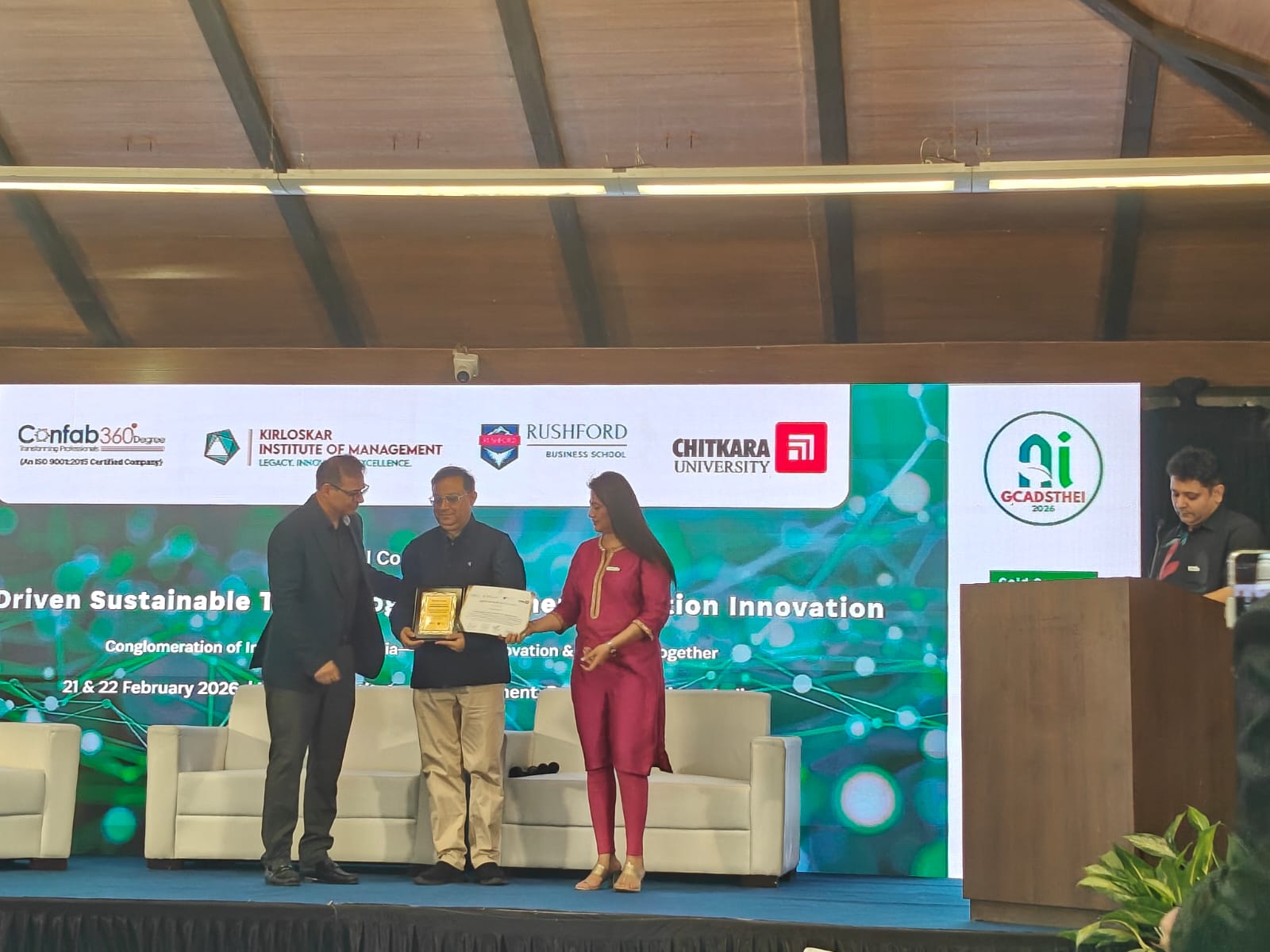
Rinoo Rajesh receiving Industry–Academia Integrator Award for AI & Education Synergy at Confab 360 Global Conference
Receiving the Industry–Academia Integrator Award for AI & Education Synergy at the Confab 360° Global Conference.

Today, I had the honour of being recognised at the Confab 360° Global Conference with the Industry–Academia Integrator Award for AI & Education Synergy. I am grateful for this acknowledgement— not because awards are the destination, but because they represent a growing, shared conviction: the future of talent and innovation will be shaped by how effectively industry and academia work together.

Confab 360° is building exactly that kind of bridge—bringing together thought leaders, educators, innovators, and practitioners to create meaningful dialogue on business, technology, leadership, and impact. Events like these are not mere gatherings; they are catalysts for collaboration, knowledge exchange, and collective growth.

In the age of AI, the most valuable advantage is not technology alone—
it is the ecosystem that converts technology into skills, skills into outcomes, and outcomes into societal progress.

If you’d like context on my larger perspective on this theme, you can also read: Bridging Industry and Academia in the Age of AI .

Why Industry–Academia Collaboration Matters More Than Ever

AI is compressing time. Roles are evolving faster than traditional curriculum cycles, and organisations are under pressure to modernise capability—without compromising quality, compliance, or ethics. In this environment, industry–academia collaboration becomes a strategic necessity—not a goodwill initiative.

1) Building AI-Ready, Future-Ready Talent

The employability gap is rarely about intelligence or intent. It is often about exposure: real problem statements, modern tooling, cross-functional thinking, and professional communication. When academia and industry co-design learning journeys, students graduate with:

  • Role clarity: what the job actually looks like in real settings
  • Skill relevance: the right balance of fundamentals + applied capability
  • Portfolio credibility: projects that are measurable and verifiable
  • Professional maturity: communication, stakeholder thinking, and ownership

2) Translating Research Into Real-World Outcomes

Research becomes powerful when it solves a lived problem—whether in banking, healthcare, manufacturing, education, or public services. With AI, applied research can move from theory to prototype to deployment faster than ever—if we align: problem owners (industry), research capability (academia), and delivery discipline (execution teams).

3) Creating Responsible AI Through Governance and Practice

Responsible AI is not a slide—it is an operating model. When academia and industry collaborate, we can embed best practices around: privacy, security, bias checks, human-in-the-loop review, auditability, and change management—so AI adoption becomes sustainable.

What “AI & Education Synergy” Looks Like in Practice

“Synergy” can sound abstract, so here are practical ways this shows up when done well:

  • Curriculum modernization with industry review boards and fast refresh cycles
  • Live projects with real constraints: timelines, compliance, stakeholder feedback
  • Faculty enablement via industry immersion and co-teaching models
  • Innovation labs where prototypes are tested with real users and data boundaries
  • Mentorship networks that build both technical and leadership capability
  • Career readiness programs that focus on role-based outcomes, not generic training

Reflections From Confab 360°: Ecosystems Create Momentum

One of the most inspiring aspects of Confab 360° is the intent to build a platform that brings diverse stakeholders together— educators, researchers, industry leaders, and policy influencers—to build momentum around innovation and higher education. The energy and clarity of purpose across the community reinforced a simple insight:

Collaboration works when it is designed—with outcomes, cadence, roles, and accountability.

Acknowledgements and Gratitude

I extend heartfelt thanks to Confab 360° and the institutions and leaders who made this conference meaningful. I am grateful for the recognition and, more importantly, for the opportunity to keep contributing to a cause that matters.

If you are a university, institute, corporate, or industry body looking to strengthen your industry–academia bridge (AI readiness, applied projects, innovation labs, curriculum review, mentorship ecosystems), I’m open to structured collaboration conversations.

You can reach me via my blog or connect on LinkedIn (https://www.linkedin.com/in/rinoorajesh) or (https://www.rinoorajesh.com)

Sunday, December 14, 2025

Leadership Conversations Beyond the Boardroom: An Evening at the GCC Leaders Golf Mixer

I recently had the opportunity to attend the GCC Leaders Golf Mixer in Pune, hosted at the iconic Poona Club Golf Course, and it turned out to be one of the most refreshing leadership and networking experiences I’ve had in recent times.


What made this gathering stand out was its intentional simplicity — no presentations, no pitches, no fixed agendas. In an era where leadership forums are often dominated by presentations, pitches, and rigid agendas, this gathering stood apart. There were no slide decks, no sales conversations, and no predefined outcomes — just meaningful networking and open conversations among leaders from Global Capability Centers (GCCs), finance, and technology.

Just leaders from GCCs, finance, and technology coming together in a relaxed, open setting to exchange perspectives, experiences, and ideas. In a world overflowing with structured meetings and slide decks, this format felt like a welcome pause — one that allowed conversations to flow naturally and authentically.

Golf and Leadership: Lessons Beyond the Game

The choice of golf as the medium for engagement was particularly thoughtful. The game itself encourages calm, focus, and introspection — qualities that mirror many aspects of leadership and transformation work.

As someone still discovering the sport, the experience was both enjoyable and humbling. Golf has a way of reminding you that progress comes from patience, precision, and continuous learning — lessons that translate seamlessly into how we lead teams, drive change, and navigate complexity in professional environments.

Every swing, much like every leadership decision, demands intent, awareness, and acceptance that improvement is a journey rather than an instant outcome.

The Power of Unstructured Peer Exchange

What I valued most was the quality of peer-to-peer conversations. Without the pressure of formal agendas or outcomes, discussions became deeper, more honest, and far more insightful.

What truly elevated the evening was the quality of peer-to-peer networking. Conversations flowed effortlessly across topics such as:

  • GCC leadership challenges
  • Digital and organizational transformation
  • Talent, culture, and capability building
  • Navigating scale and complexity

Without the pressure to sell or impress, discussions became deeper, more candid, and far more valuable. These are the interactions that often lead to long-term professional relationships and collaborative opportunities.

These are the kinds of interactions that often spark long-term connections — not because of what was sold or presented, but because of what was genuinely shared.

Gratitude and Looking Ahead

My sincere thanks to the Bluecopa team for curating such a thoughtful and well-designed platform for leadership networking. I look forward to staying connected with the inspiring leaders I met and continuing these conversations beyond the event. Equally, I’m excited to continue my journey as a budding golfer, learning one swing — and one leadership lesson — at a time.

In a fast-changing world, it’s often these informal, well-designed interactions that leave the most lasting impact on how we lead, connect, and transform.

 And yes, I’m equally looking forward to continuing my journey as a budding golfer, learning one swing (and one leadership lesson) at a time. ⛳

Sunday, September 17, 2023

The Evolution of CPaaS: From Basic Communication Tools to Robust Business Enablers

Communication has always been the cornerstone of human interaction, and the digital era has brought unprecedented advancements in the way we connect and engage with each other. One of the most significant developments in recent times is the evolution of CPaaS (Communications Platform as a Service). CPaaS has revolutionized the way businesses and individuals interact, offering a seamless and powerful platform for real-time communication. In this article, we will explore the journey of CPaaS, its emergence, key features, and its impact on various industries.

Communication Platform as a Service (CPaaS) has come a long way since its inception, transforming the way businesses interact with their customers. As we trace the evolutionary journey of CPaaS, from its humble beginnings as basic communication tools to becoming robust business enablers that revolutionize customer engagement, collaboration, and overall efficiency

The Emergence of CPaaS

In the early 2000s, as the internet and mobile technologies started to gain momentum, CPaaS emerged as a collection of simple communication tools, primarily providing APIs for developers to integrate voice calls, SMS, and fax services into their applications. Businesses sought innovative ways to enhance their communication strategies. Traditional communication methods like emails and phone calls were not sufficient to meet the demands of real-time interaction and engagement. These tools laid the groundwork for efficient communication, allowing businesses to send automated messages and provide better customer support. However, they were limited in scope and lacked the sophisticated features that would eventually turn CPaaS into a crucial component of modern business ecosystems. This led to the development of CPaaS, a cloud-based solution that enables businesses to integrate voice, video, and messaging capabilities into their applications and websites.

1.       Key Features of CPaaS: CPaaS offers a plethora of features that make it a game-changer in the world of communication. Some of the key features include:

a.       Voice: CPaaS allows businesses to integrate voice calls into their applications using APIs (Application Programming Interfaces). This enables interactive voice responses, call forwarding, and conference calling.

b.       Messaging: Real-time two-way messaging through SMS and MMS enables businesses to engage with customers instantly, providing notifications, alerts, and promotional messages.

c.        Video: CPaaS facilitates video communication, enabling businesses to conduct virtual meetings, webinars, and video conferencing directly within their applications.

d.       Chat: Integrating chat capabilities enables businesses to offer live support and engage with customers in real-time through web and mobile applications.

e.       Verification: CPaaS provides secure two-factor authentication (2FA) via SMS or voice, ensuring enhanced security for user accounts and transactions.

2.       Impact on Various Industries: The evolution of CPaaS has had a profound impact on numerous industries, transforming the way they communicate with their stakeholders and customers.

a.       Banking and Finance: CPaaS has revolutionized the financial sector by enabling secure two-factor authentication, real-time transaction alerts, and personalized customer interactions through messaging and chat. This has enhanced customer trust and streamlined communication between financial institutions and their clients.

b.       Healthcare: The healthcare industry has embraced CPaaS for appointment reminders, patient communication, and telemedicine applications. CPaaS enables healthcare providers to deliver timely healthcare information to patients while maintaining compliance with privacy regulations.

c.        Retail: CPaaS has become a vital tool for the retail sector, offering personalized marketing campaigns through SMS and MMS, enhancing customer engagement, and driving customer loyalty with mobile coupons and offers.

d.       Travel and Hospitality: CPaaS has improved customer service in the travel industry by enabling instant updates on flight statuses, hotel reservations, and providing customer support through messaging and chat.

e.       Education: In the education sector, CPaaS has enabled distance learning and virtual classrooms, allowing educators to engage with students globally through video conferencing and real-time messaging.

3.       Advantages of CPaaS: The evolution of CPaaS has brought several advantages to businesses of all sizes:

a.       Cost-Effectiveness: CPaaS eliminates the need for expensive infrastructure and maintenance costs, as the communication services are provided through the cloud.

b.       Scalability: CPaaS solutions can scale up or down based on business requirements, making it suitable for startups, SMEs, and large enterprises alike.

c.        Integration: CPaaS seamlessly integrates with existing applications, websites, and backend systems, ensuring a smooth transition and consistent user experience.

d.       Global Reach: CPaaS enables businesses to communicate with customers across the globe through SMS, voice, and video, breaking down geographical barriers.

e.       Innovation and Flexibility: CPaaS encourages innovation, allowing developers to build unique communication solutions tailored to their business needs.

The Shift to Cloud-Based Solutions

As the demand for seamless and scalable communication grew, CPaaS evolved into cloud-based solutions. The shift to the cloud brought numerous benefits, including easy deployment, reduced infrastructure costs, and global accessibility. Developers no longer needed to manage complex telephony systems; instead, they could leverage APIs hosted in the cloud to enable real-time communication across various channels, such as voice, video, and messaging.

The Rise of API Integration

One of the significant turning points in the evolution of CPaaS was the emphasis on API integration. By opening up their platforms to developers, CPaaS providers allowed businesses to customize and embed communication features into their existing applications and workflows. This marked the beginning of a new era of flexible, tailored communication solutions that catered to the specific needs of each business

Advanced Features and Functionality

As CPaaS matured, providers introduced advanced features such as Interactive Voice Response (IVR), video conferencing, and WebRTC integration. These functionalities empowered businesses to deliver personalized experiences, automate customer interactions, and enhance collaboration. CPaaS became more than just a communication tool; it became a comprehensive suite of services that boosted customer engagement and operational efficiency.

Omnichannel Communication

With the advent of omnichannel communication, CPaaS platforms expanded beyond traditional channels. Today, businesses can seamlessly interact with customers across various platforms, including social media messaging apps like WhatsApp, Facebook Messenger, and WeChat. This omnichannel approach has transformed customer service, enabling businesses to provide consistent and personalized support, regardless of the channel chosen by the customer

AI-Powered Capabilities

The integration of Artificial Intelligence (AI) and Machine Learning (ML) into CPaaS solutions further elevated their capabilities. AI-powered chatbots now handle routine customer queries, while sentiment analysis helps businesses gauge customer satisfaction in real-time. Additionally, AI-driven analytics provide valuable insights into customer behavior and preferences, enabling businesses to refine their marketing strategies and improve overall performance

Security and Compliance

As CPaaS solutions became integral to businesses, security and compliance emerged as top priorities. Providers implemented robust security measures, like encryption and secure data storage, to safeguard sensitive information. Compliance with regulations such as GDPR and HIPAA became critical, ensuring customer data was handled responsibly and in accordance with the law

Conclusion

The evolution of CPaaS from basic communication tools to robust business enablers showcases its immense impact on modern businesses. Today, CPaaS empowers organizations to build stronger customer relationships, improve operational efficiency, and create innovative communication experiences. As technology continues to advance, CPaaS will undoubtedly play an increasingly vital role in shaping the future of business communication

Sunday, May 08, 2022

The Metaverse and Its Implications for the Future of Employment

In response to these trends and shifts, organizations with the financial wherewithal are considering hybrid work arrangements and even planning for a wholly remote workforce in the not-too-distant future. It is at this point that virtual collaboration platforms such as the metaverse become very valuable.

Companies such as Microsoft have already experienced the advantages of the metaverse for their staff. For example, online meetings have made it possible for timid workers who might otherwise refrain from speaking at in-person meetings to feel more comfortable expressing themselves. Additionally, each participant in the meeting will be able to examine the profiles of the employees. Managers and other workers will be able to learn more about them and maybe reach out to them as a result of this. For a firm to be successful, it is critical that its employees feel seen and heard by not just the company, but also by their coworkers and supervisors. Bill Gates - Microsoft co-founder (https://www.usatoday.com/story/tech/2021/12/10/bill-gates-metaverse-work-meetings-predictions/6459911001/ ) - predicts most workers will take their virtual meetings within the metaverse in the next two or three years. He did this prediction on his website, stating – “I predict most virtual meetings will move from 2D camera image grids – which I call the "Hollywood Squares model," although I know that probably dates me – to the metaverse, a 3D space with digital avatars”.

I personally remember how effectively Nortel was using Web.Alive technology for similar use cases. Disclaimer - I used to work for Nortel - There were reviews such as this one by zdnet (https://www.zdnet.com/pictures/a-tour-of-nortels-webalive-virtual-world-for-business/) – “Nortel's new WebAlive world combines a virtual world with fantastic audio to make a business collaboration platform. Here's a preview of that world.” Remember, this was 2008 ! It was also covered by TechRepublic.om - https://www.techrepublic.com/pictures/a-tour-of-nortels-webalive-virtual-world-for-business/

We did bag a few customers – (https://techmonitor.ai/technology/data-centre/nortel_bags_first_webalive_customer_120109) – “Communications vendor Nortel has announced that PC maker Lenovo has become the first company to take advantage of its web.alive virtual world technology in a new online virtual store. Web.alive is a collaborative, browser-based virtual world application aimed at enterprises and according to the company, can provide an immersive, interactive, and web integrated world with 3D voice and graphics.”

However, as usual, Nortel was way ahead of its time by almost a decade and a half. The Market wasn't ready. 

Avaya also tried to keep this alive (pun intended)… https://www.eweek.com/enterprise-apps/avaya-web.alive-creates-avatar-based-collaboration-environment/ although it had to be kind of shutdown by 2016… and now Meta (formerly Facebook) and other tech giants have woken up to the potential of the same technology.

There is a popular construct known as creative destruction that explains how innovation helps forward-thinking companies replace organizations that fail to adapt to technological advances. Think of all the companies that went out of business because they couldn’t adapt to the digital age. Add the disruption of a global pandemic, and you get an economy where only those that modify their practices can survive.

Companies can learn how to navigate these disruptions from the tech industry, where businesses must constantly reinvent themselves to keep up with and surpass the competition and the network that most tech companies are looking to utilize for the future is the metaverse.

People's well-being is dependent on their ability to form and maintain human relationships. The metaverse may aid in the development of interpersonal ties, which are important for those who work from home. Instead of participating in a Zoom conference, picture donning a virtual reality headset and participating in an immersive virtual meeting as an incarnation of yourself. As an avatar, you will be able to engage with other people who are present in the conference via visual and spatial-audio links. A similar sensation would be experienced while dealing with a coworker in a real office.

Consider the possibility that your next meeting may be with customers from Company B. The gathering is taking place on their virtual reality platform. Company B's platform will be interoperable with yours, which will enable you to smoothly transition to their platform for the meeting and interact with their staff. Companies will benefit from the metaverse because it will enable them to save time, reduce travel expenses, and foster relationships that were previously impossible.

New possibilities with the metaverse

As amazing and futuristic as these new technologies are, they can also be incredibly intimidating. Building components for the metaverse include the capacity to host hundreds of individuals in one server (perhaps, future metaverses will be able to accommodate thousands or even millions of people at once), motion-tracking systems that can identify where a person's eyes are, and more

According to Forbes (https://www.forbes.com/sites/forbesbusinesscouncil/2022/03/18/the-metaverse-the-future-of-work/?sh=525396b4267e ) – “Business leaders have realized that we now live in a new era of work and that the standard business practices of old no longer apply. Many understand that to succeed, they need to leverage the benefits of the metaverse.”

Not only have people's views of the virtual world evolved, but so have the possibilities that may arise as a result of it. Growing and developing possibilities will arise as the metaverse area evolves and develops. In response to technology improvements, new career opportunities will be developed. The need for individuals who are informed about the area will grow in the future.

Conclusion

The metaverse type technology began by emerging into everyday life as entertainment, but it took a global pandemic to reset a few things and then speed up its embrace by work culture. The once-in-a-generation event forced most companies to re-evaluate their operations, with many deciding to reduce the in-person office and attempt to transition to a more digital future. This is going hand in hand with the world's gradual transition to a post-pandemic period, technological advancements are having a considerable, life-changing, impact on the human experience in both the physical and digital realms.

Sooner or later, the metaverse will begin to have a greater effect on not just our workplace but also on our general everyday lives, eventually becoming the new normal. The metaverse is the workplace of the future, as well as the future of the whole globe.

Let me know your thoughts.... and as usual - click here to follow this blog!

Sunday, April 24, 2022

Metaverse – Current Trends & Changes

Chief executive officers and executives from related industries believe that the concept of the workplace is changing. Along with the technologies that influence the development of these concepts, there are new ideas about business culture, manager-employee dynamics, the convergence of real and virtual places, as well as the evolution of these ideas.

People think that the metaverse is about living in a virtual existence, when, in my opinion, it is actually an adaptive and functional way for the fictional worlds to join our reality.

According to an article in The Hindu (https://www.thehindubusinessline.com/info-tech/virtual-banks-digital-humans-social-chat-spacesinsides-tcs-metaverse-gameplan/article65267748.ece) – “Metaverse is the new buzzword in the technology world globally, and IT companies seem to be leading the way. IT services major Tata Consultancy Services (TCS) has already started working on several metaverse projects including a “virtual bank” for retail transaction and a non-fungible token (NFT) marketplace using its own blockchain solution, a senior company executive told BusinessLine.”

According to an article in the Business Standard (https://www.business-standard.com/article/companies/ltts-forays-into-meta-world-to-carve-out-business-unit-for-metaverse-122032900666_1.html) – “Amit Chadha, CEO & MD, LTTS shared that while the Coronavirus (Covid-19) pandemic accelerated digital transformation of the business across the globe, the confluence of 5G, digital products, AI and digital manufacturing is finally merging the physical and digital to create a plausible phygital universe.”

According to Yourstory (https://yourstory.com/the-decrypting-story/biggest-trends-metaverse-space/amp) – “One of the biggest trends that is already taking over the metaverse space is Cryptocurrencies and NFTs (Non-fungible tokens). Already more than a $10 billion market, digital items like NFTs can be created, sold, and purchased in an open market, owned by an individual user without interference from a centralised entity”

In spite of the fact that some changes had already taken place in the workplace before the outbreak, COVID-19 has demonstrated the necessity of a functional world separate from the real world, has accelerated the consideration of unorthodox practices, and has opened doors for the implementation of new practices. While the pandemic is in progress, businesses that wish to survive and keep personnel are adjusting to these changes. In the post-pandemic age, these changes will almost certainly become permanent.

Over the course of COVID, there has been a growth in the popularity of two significant themes in the metaverse and the future of work: hybrid work and the so-called "Great Reshuffle."

Creator economy is already there in Metaverse! “Internet 3.0” is entirely decentralized. Almost all virtual games or environments that are being built in the metaverse are already selling their assets, avatars, and all usable equipment as NFTs. The value of digital goods is increasing compared to their physical counterparts, for example, NFTs of tweets and avatars are valued higher than some high-priced paintings!

The idea of DAOs which represents Decentralized Autonomous Organizations is another pattern that is assuming control over the metaverse. The metaverse is actually an independent reality that isn't constrained by a brought-together substance. DAOs are advancing step by step and with time, will give clients more command over concluding what they look for from each computerized stage, great or administration

Building components for the metaverse include the capacity to host hundreds of individuals in one server (perhaps, future metaverses will be able to accommodate thousands or even millions of people at once), and motion-tracking systems that can identify where a person's eyes are, and more. 

Companies, brands, and individuals who are aware of these trends and the online culture that exists in the metaverse can develop and expand their digital identities, content, and products to outperform their competitors. The greatest way to expand your brand is to adapt to the ever-changing metaverse and embrace their digital development.

Let me know your thoughts.... and as usual - click here to follow this blog!

Monday, April 11, 2022

Metaverse - Introduction!

The pandemic COVID-19, which is still ongoing, at least in some parts of the world, has had a significant impact on the dynamics of our society. Many individuals lost their employment, but they also had to adjust to fundamental changes in the workplace, which affected millions of people. However, the pandemic also accelerated the adoption of digital both by businesses and by the masses. it’s only a matter of time before the digital verse or the metaverse becomes a reality, given the speed with which technologies and businesses are developing creative ideas surrounding this immersive reality.

The Technology itself is not THAT new, however. We have had these kinds of “virtual worlds” available for more than a decade in the gaming world. There was a second life which way back in 2008 created so much hype that one article claimed that one-day second life would buy google itself. Of course, it didn’t’ pan out quite that way. Google went on to become the juggernaut that it is today and facebook emerged for the masses. However, the idea of an immersive virtual reality refused to die down. The most important mainstream depiction of the same was the “holodeck” of Star trek.

Nortel had its web.alive platform – which was a very immersive engine. We had a variety of games, too many to name them here. These transformations have resulted in the demise of rigid enterprises and the emergence of new economies, such as the metaverse economy. What will the future of employment look like if we go ahead in the context of a metaverse economy is an open question?

The phrase "metaverse" has always generated a lot of excitement in the technology community. The specific meaning of the term and how it will show to be an outstanding instrument in the future are not well understood by the majority of people.

In order to help you comprehend the metaverse's basics and functioning, we'll go over all you need to know about it in this post. So let's get this party started.

Introduction to metaverse

Imagine being able to build your ideal alter-ego in a virtual environment where you have complete control over every element of your persona. You have the freedom to do anything you want, to possess whatever you want, and pursue practically any opportunity that comes your way.

A scene like this was often portrayed in science fiction films and television programs. However, it is possible that it may become a reality in the near future since there is a lot of excitement in the business world about getting every layer, technology, and protocol ready to build "The Metaverse."

The conceptual breadth of the metaverse seems to be endless. It will vary from your house, street, business, and town or city, down to the solar system itself, and everything in between. It will also be a realm of fantasy worlds as well as social, economic, and cultural experimentation.

Those of us of a certain age may be hesitant about spending our waking hours in the metaverse where everything will be gamified, but it is the digital natives among us who inhabit today’s metaverse of Fortnite, Roblox, and Minecraft who will likely adapt the fastest and prosper.

In parallel with the world's gradual transition to a post-pandemic period, technological advancements are having a tremendous impact on the human experience in both the physical and digital realms.

Sooner or later, the metaverse will begin to have a greater effect on not just our workplace but also on our general everyday lives, eventually becoming the new normal. The metaverse is the workplace of the future, as well as the future of the whole globe.

Building components for the metaverse include the capacity to host hundreds of individuals in one server (perhaps, future metaverses will be able to accommodate thousands or even millions of people at once), and motion-tracking systems that can identify where a person's eyes are, and more.

Let me know your thoughts.... and as usual - click here to follow this blog!

Sunday, February 20, 2022

New Normal - Borderless Workforce

The world has changed, and it has changed very rapidly indeed in the last 2 years. We all agree that the COVID-19 outbreak is a world-changing event that will have long-lasting implications for the global economy. It has been a once-in-a-generation global impact event. While there is no doubt that the pandemic is amplifying the adoption of new technologies, technological advancements were already changing the world over the past two decades, from living standards to the very nature of our work. It takes a world-changing event like the COVID-19 pandemic to accelerate certain trends so dramatically and workforce-related changes have been, perhaps, the most profound.

“Adaptability is about the powerful difference between adapting to cope and adapting to win” – Max McKeown

See, even before the pandemic struck, some features of the state of technological progress aka digital transformation were especially salient.

First, technology was already disrupting production processes, especially through the rapid scale-up of digital platforms.

Second, technology created seismic shifts in the mix of skills required to succeed in the labor market. these include cognitive skills such as critical thinking, as well as socio-behavioral skills such as managing and recognizing emotions that enhance teamwork or selling better. Earnings are higher for those who have a combination of these skills.

Third, digital technology changed the terms of work. Rather than “standard” long-term contracts, digital technologies have given rise to more short-term work, often via online work platforms. These “gigs” make certain kinds of work more accessible and flexible.

A hybrid virtual approach in which some workers work on-site while others work from home promises greater access to talent, enhanced productivity for individuals and small teams, cheaper costs, increased individual freedom, and better employee experiences. There are three major obstacles in implementing remote working:

1.            Securing the infrastructure for remote working

2.            Implementing new work policies in a structural way

3.            Balancing the work and private lives of Employees

With 40% of companies encouraging increased flexibility in terms of the country or office to work from over the next three years, and over 36% increasing the number of international remote workers not necessarily affiliated with a local office, the workforce of the future appears to be far more fluid and globalized.

“The greatest danger in times of turbulence is not the turbulence -it is to act with yesterday’s logic”- Peter Drucker

With such conditions, businesses' appetites will be piqued for one thing: A borderless Workforce.

Why?

1.            Is it More Effective? - Employees working remotely in various regions of the world save operating costs like salary, administrative expenditures, and business travel expenses. With a global workforce, you can provide round-the-clock support and significantly reduce your turnaround time. 

2.            Does it create new market opportunities? - Local skills may be unlocked and new possibilities can be created by a more globalized workforce. Striking for a borderless global workforce allows your organization to access high-quality personnel from all around the world, increasing your chances of being recognized in any market.

3.            Is it more sustainable? - Remote working decreases commute time and business travel, improving a company's environmental, social, and governance credentials. It aids in the prevention of brain drain from developing markets on a global level, and it aids in the creation of stronger social cohesion in smaller towns and rural regions on a local level.

As organizations start to reopen, they are finding that their workforce is not keen to give up remote work. Companies can no longer say that they cannot operate remotely (a common reason to avoid remote work pre-2020), but with an ongoing global pandemic, they also cannot ask employees to come back to the office full-time. The most popular solution is the thing that every organization seems to be grappling with now — the hybrid model.

People refer to the hybrid model a lot; it involves some combination of working remotely and from an office. So far, the hybrid model looks different for every organization, but there are a few clear themes. Whatever the specifics, however, companies that choose to incorporate a hybrid model will all face some challenges ranging from culture-specific to seamless collaboration to the kind of talent that is available. Borderless workforces break down geographical barriers and develop a culture of cooperation and complete adaptability, allowing businesses to grow at an unprecedented rate while leveraging global talent to solve business problems.

Click here to follow this blog!