Industry–Academia Collaboration in the Age of AI: Honoured at Confab 360° Global Conference
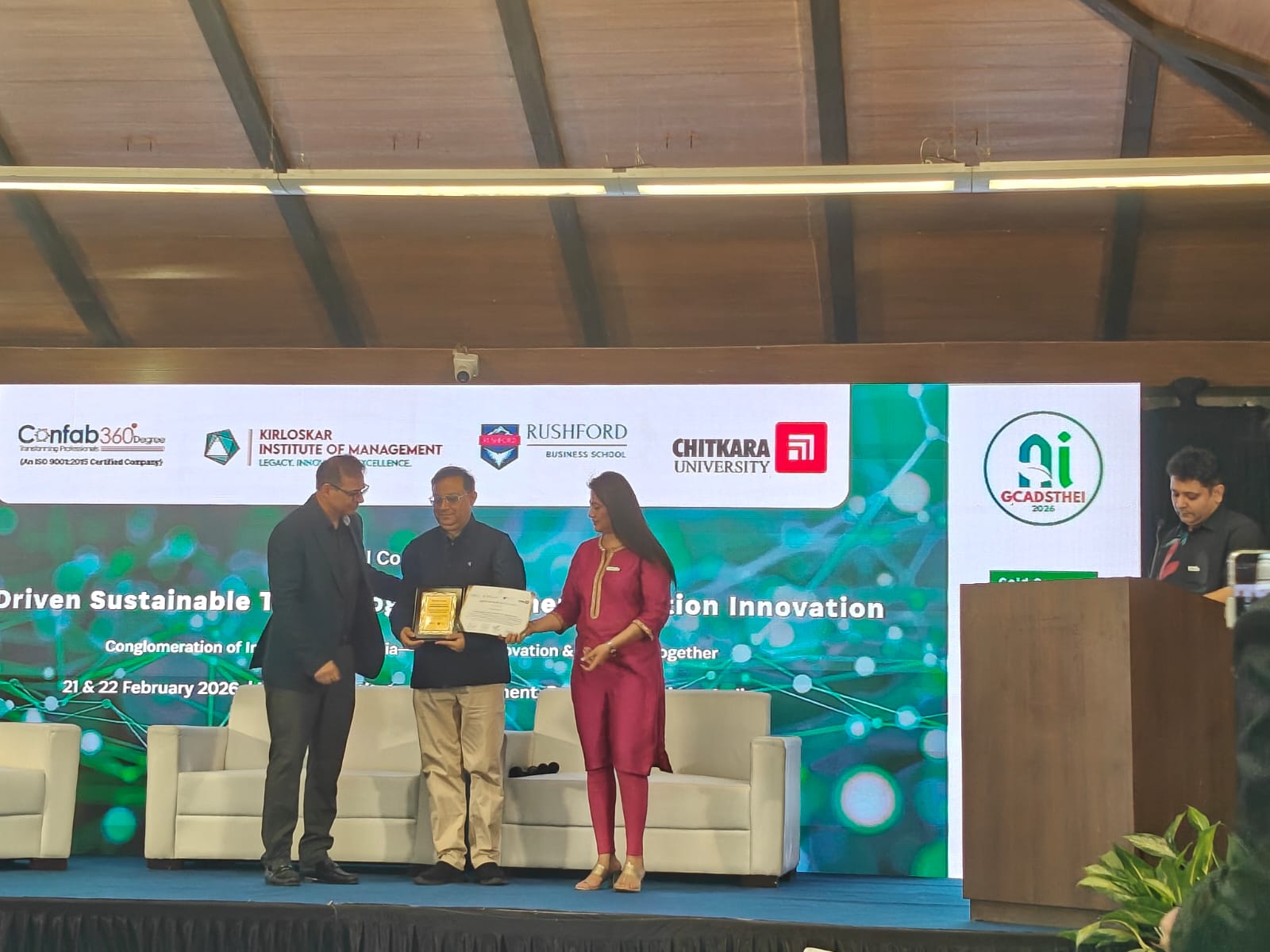
Today, I had the honour of being recognised at the Confab 360° Global Conference with the Industry–Academia Integrator Award for AI & Education Synergy. I am grateful for this acknowledgement— not because awards are the destination, but because they represent a growing, shared conviction: the future of talent and innovation will be shaped by how effectively industry and academia work together.
Confab 360° is building exactly that kind of bridge—bringing together thought leaders, educators, innovators, and practitioners to create meaningful dialogue on business, technology, leadership, and impact. Events like these are not mere gatherings; they are catalysts for collaboration, knowledge exchange, and collective growth.
In the age of AI, the most valuable advantage is not technology alone—
it is the ecosystem that converts technology into skills, skills into outcomes, and outcomes into societal progress.
If you’d like context on my larger perspective on this theme, you can also read: Bridging Industry and Academia in the Age of AI .
Why Industry–Academia Collaboration Matters More Than Ever
AI is compressing time. Roles are evolving faster than traditional curriculum cycles, and organisations are under pressure to modernise capability—without compromising quality, compliance, or ethics. In this environment, industry–academia collaboration becomes a strategic necessity—not a goodwill initiative.
1) Building AI-Ready, Future-Ready Talent
The employability gap is rarely about intelligence or intent. It is often about exposure: real problem statements, modern tooling, cross-functional thinking, and professional communication. When academia and industry co-design learning journeys, students graduate with:
- Role clarity: what the job actually looks like in real settings
- Skill relevance: the right balance of fundamentals + applied capability
- Portfolio credibility: projects that are measurable and verifiable
- Professional maturity: communication, stakeholder thinking, and ownership
2) Translating Research Into Real-World Outcomes
Research becomes powerful when it solves a lived problem—whether in banking, healthcare, manufacturing, education, or public services. With AI, applied research can move from theory to prototype to deployment faster than ever—if we align: problem owners (industry), research capability (academia), and delivery discipline (execution teams).
3) Creating Responsible AI Through Governance and Practice
Responsible AI is not a slide—it is an operating model. When academia and industry collaborate, we can embed best practices around: privacy, security, bias checks, human-in-the-loop review, auditability, and change management—so AI adoption becomes sustainable.
What “AI & Education Synergy” Looks Like in Practice
“Synergy” can sound abstract, so here are practical ways this shows up when done well:
- Curriculum modernization with industry review boards and fast refresh cycles
- Live projects with real constraints: timelines, compliance, stakeholder feedback
- Faculty enablement via industry immersion and co-teaching models
- Innovation labs where prototypes are tested with real users and data boundaries
- Mentorship networks that build both technical and leadership capability
- Career readiness programs that focus on role-based outcomes, not generic training
Reflections From Confab 360°: Ecosystems Create Momentum
One of the most inspiring aspects of Confab 360° is the intent to build a platform that brings diverse stakeholders together— educators, researchers, industry leaders, and policy influencers—to build momentum around innovation and higher education. The energy and clarity of purpose across the community reinforced a simple insight:
Collaboration works when it is designed—with outcomes, cadence, roles, and accountability.
Acknowledgements and Gratitude
I extend heartfelt thanks to Confab 360° and the institutions and leaders who made this conference meaningful. I am grateful for the recognition and, more importantly, for the opportunity to keep contributing to a cause that matters.
If you are a university, institute, corporate, or industry body looking to strengthen your industry–academia bridge (AI readiness, applied projects, innovation labs, curriculum review, mentorship ecosystems), I’m open to structured collaboration conversations.
You can reach me via my blog or connect on LinkedIn (https://www.linkedin.com/in/rinoorajesh) or (https://www.rinoorajesh.com)


